The third day of the Ascend Fellowship demonstrated how effective tobacco control extends beyond understanding problems—it requires identifying root causes, engaging the right stakeholders, using research to inform policy, and documenting real-world realities to inspire change.
Building on the leadership and systems-thinking concepts introduced during the previous two days, Day Three challenged us to translate theory into practical action.
Deepening Our Understanding of Systems Thinking
The morning began with an insightful recap facilitated by Grazilo, revisiting two important analytical tools introduced earlier in the fellowship: the Spidergram and the Fishbone Root Cause Analysis.
I found this recap particularly valuable because it strengthened my understanding of how the two tools complement one another.
The Spidergram enables teams to identify the “weakest leg” within a tobacco control system—the key constraint preventing progress toward a desired vision. Once that critical barrier has been identified, the Fishbone Analysis allows us to explore why that problem exists by systematically examining its underlying causes.
This progression from identifying constraints to understanding root causes provides a structured approach for designing interventions that address the real drivers of complex public health challenges.
Mapping the People Who Matter
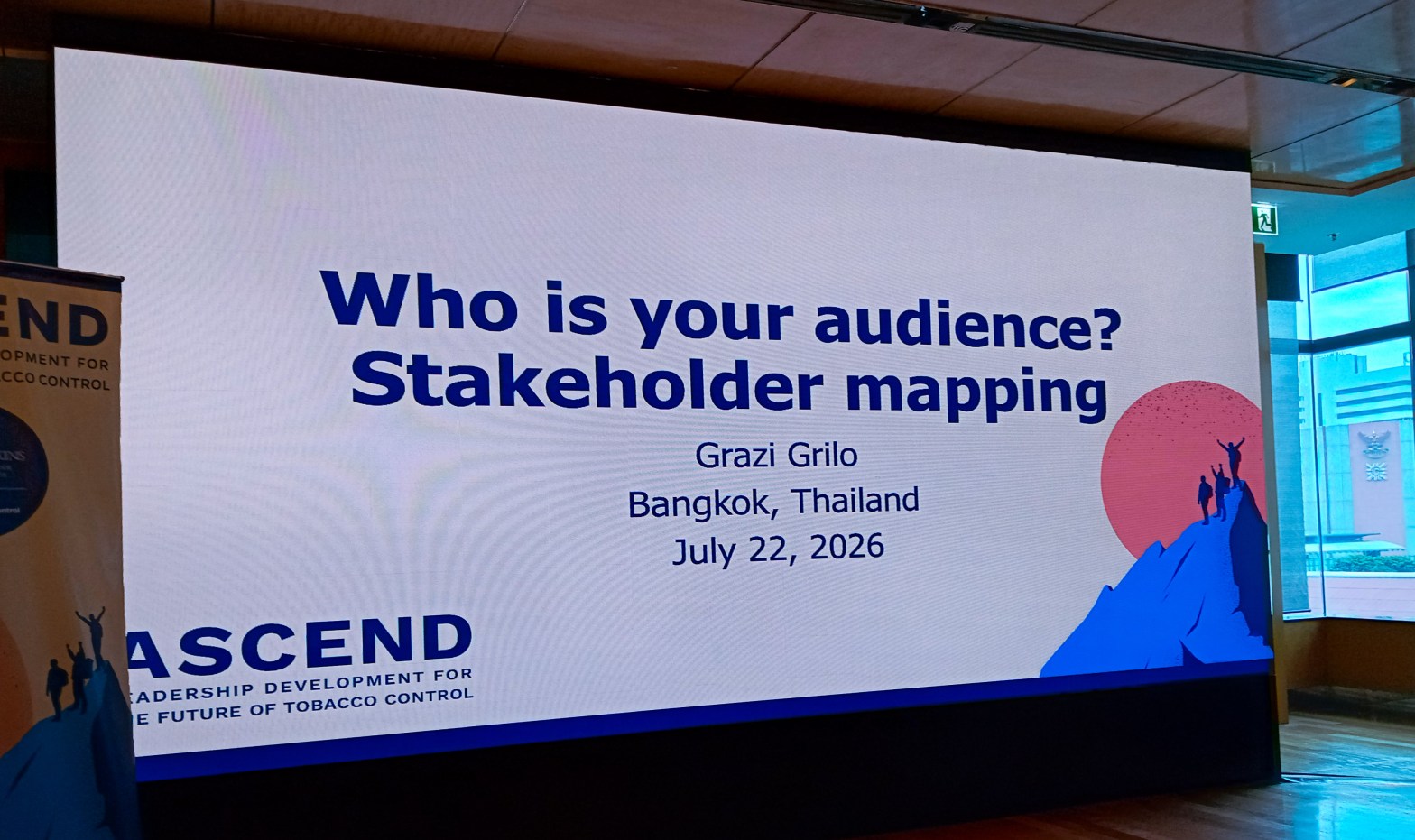
The next session focused on Stakeholder Mapping using the Influence–Interest Grid.
Working in our groups, we selected a tobacco control action based on the findings from our Fishbone Analysis before identifying the stakeholders who would influence or be affected by that action.
Using the Influence–Interest Grid, we analysed each stakeholder according to their level of influence and their degree of interest, allowing us to determine the most appropriate engagement strategy for each.
The exercise reinforced an important lesson: successful policy advocacy depends not only on evidence and technical expertise but also on understanding the people and institutions capable of driving—or obstructing—change.
I particularly appreciated the support provided by Azadi and Jared Early, who visited our group to guide our discussions and deepen our understanding of stakeholder mapping. Their questions encouraged us to think more strategically about engagement and coalition-building.
Using Research to Inform Policy
Following the health break, we participated in a session on Using Research for Needs Assessment and Policy Development in Tobacco Control.
The session was facilitated by Nico Gamalliel, a 2025 Ascend Fellow, Samantha Joan Ackary, a 2024 Fellow, and members of the current cohort, including Praise Brumeah.
Through scenario-based group exercises, participants analysed research findings and translated evidence into practical policy recommendations.
Our group focused on a scenario involving cessation services in the Philippines. Drawing from available research, we recommended increasing public awareness of cessation services while strengthening implementation of brief intervention guidelines across health facilities.
The exercise demonstrated the importance of ensuring that research does not remain confined to academic publications but instead informs policy decisions capable of improving population health.
For me, this session reaffirmed a principle that has guided much of my own work in public health: evidence achieves its greatest value when it leads to action.
Seeing Tobacco Control Through a Different Lens
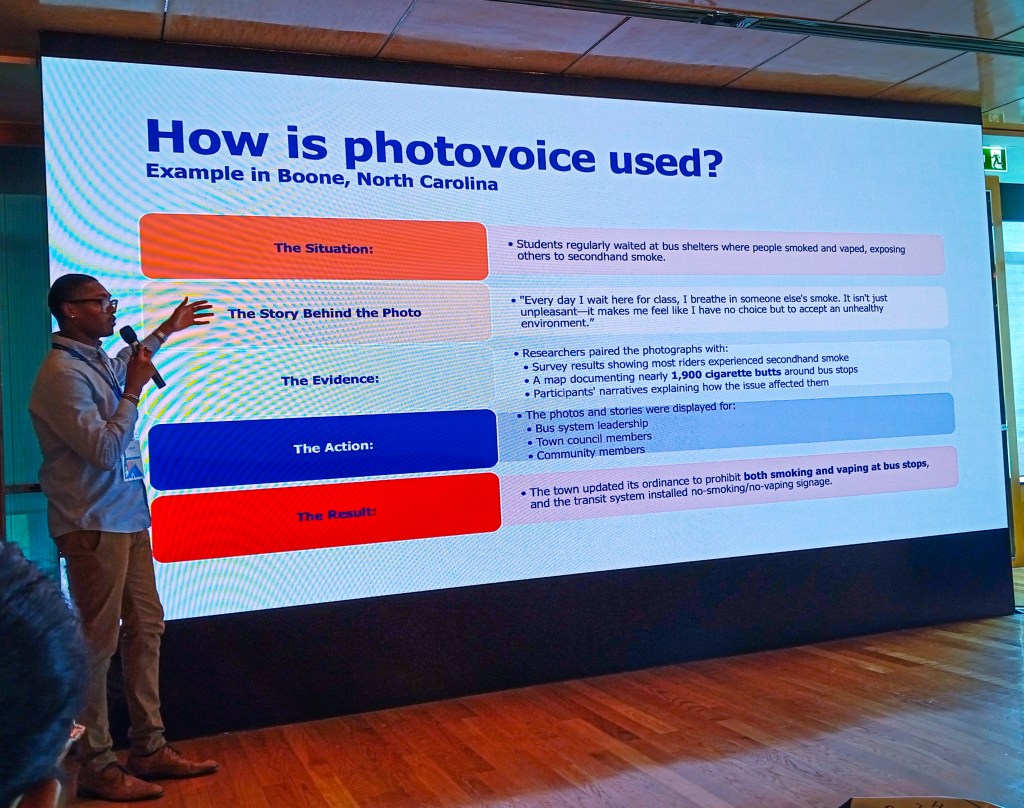
The afternoon introduced participants to Photovoice, an approach that uses photography as a tool for community engagement, advocacy, and social change.
Azadi facilitated an introduction to the methodology, explaining how carefully selected images can communicate public health realities, stimulate dialogue, and influence policy discussions in ways that statistics alone often cannot.
Before heading into the field, participants received guidance on ethical considerations, including respecting individuals’ privacy, obtaining consent where appropriate, and prioritising personal safety during data collection.
Following lunch, we left the training venue and ventured into the streets of Bangkok to begin documenting the current state of tobacco control through photographs and short videos.
Unfortunately, I didn’t make it very far. After travelling across three continents in quick succession—from the UK to Mexico and now Thailand—the rapid timezone changes finally caught up with me, and I experienced what I can only describe as travel burnout. Recognizing that I wasn’t at my best, my group was incredibly understanding and graciously encouraged me to return to the hotel to rest while they continued with the fieldwork. I’m truly grateful for their kindness and support. Sometimes, leadership is also about recognising your limits, prioritizing your wellbeing, and trusting your team to carry the work forward.
Final Reflection
Day Three reinforced that solving complex public health challenges requires more than identifying problems. It requires understanding why those problems exist, recognising who has the power to influence change, using evidence to develop practical solutions, and communicating those realities in compelling ways.
From systems thinking and stakeholder mapping to evidence-informed policymaking and Photovoice, every session contributed another important piece to the leadership toolkit needed to advance effective tobacco control.
As the Ascend Fellowship continues, I look forward to building on these lessons and discovering new ways to translate evidence into meaningful public health action.
#Ascend2026

