
The second day of the Ascend Fellowship built upon the leadership foundations established on Day One by focusing on practical approaches to strengthening tobacco control. Through systems thinking, policy analysis, litigation, and cultural exchange, the day demonstrated that advancing public health requires strategic action across multiple fronts.
Identifying the Weakest Link
The day began with reflections and announcements before we explored a session on Identifying and Prioritising Key Constraints to Achieving a Vision for Tobacco Control.
A key takeaway was learning how to use the Spidergram, a practical systems-thinking tool that helps identify the most significant constraint—or the “weakest leg”—within a tobacco control system. Rather than attempting to solve every challenge simultaneously, the Spidergram encourages policymakers and advocates to identify where targeted action can produce the greatest overall improvement.
This reinforced an important leadership lesson: effective change begins with prioritisation.
Understanding Tobacco Industry Interference
The second session, facilitated by Mouhamad Bigwanto, focused on Tobacco Industry Interference (TII).
One statement captured the essence of the discussion:
The tobacco industry is legal, but it is not normal.
The session revisited the fundamental and irreconcilable conflict of interest between the tobacco industry and public health. Participants reflected on how the industry continuously adapts its strategies to maintain influence, often employing new tactics whenever previous approaches are challenged.
Working in small groups, we analysed real Tobacco Industry Interference case studies. As a member of Group 10, I worked with colleagues to identify the interference tactics used in our assigned scenario before presenting our findings to the wider fellowship.
The exercise strengthened our ability to recognise and respond to industry interference in different policy contexts.
Litigation as a Public Health Tool
The afternoon session, facilitated by Grazi, explored the important role litigation has played in advancing tobacco control globally.
Among the examples discussed was the Master Settlement Agreement, a landmark legal action that resulted in the release of internal tobacco industry documents and substantial financial compensation for tobacco-related diseases and deaths. The case remains one of the most significant examples of how litigation can expose industry misconduct and strengthen public health policy.
The session’s highlight was an interactive courtroom simulation.
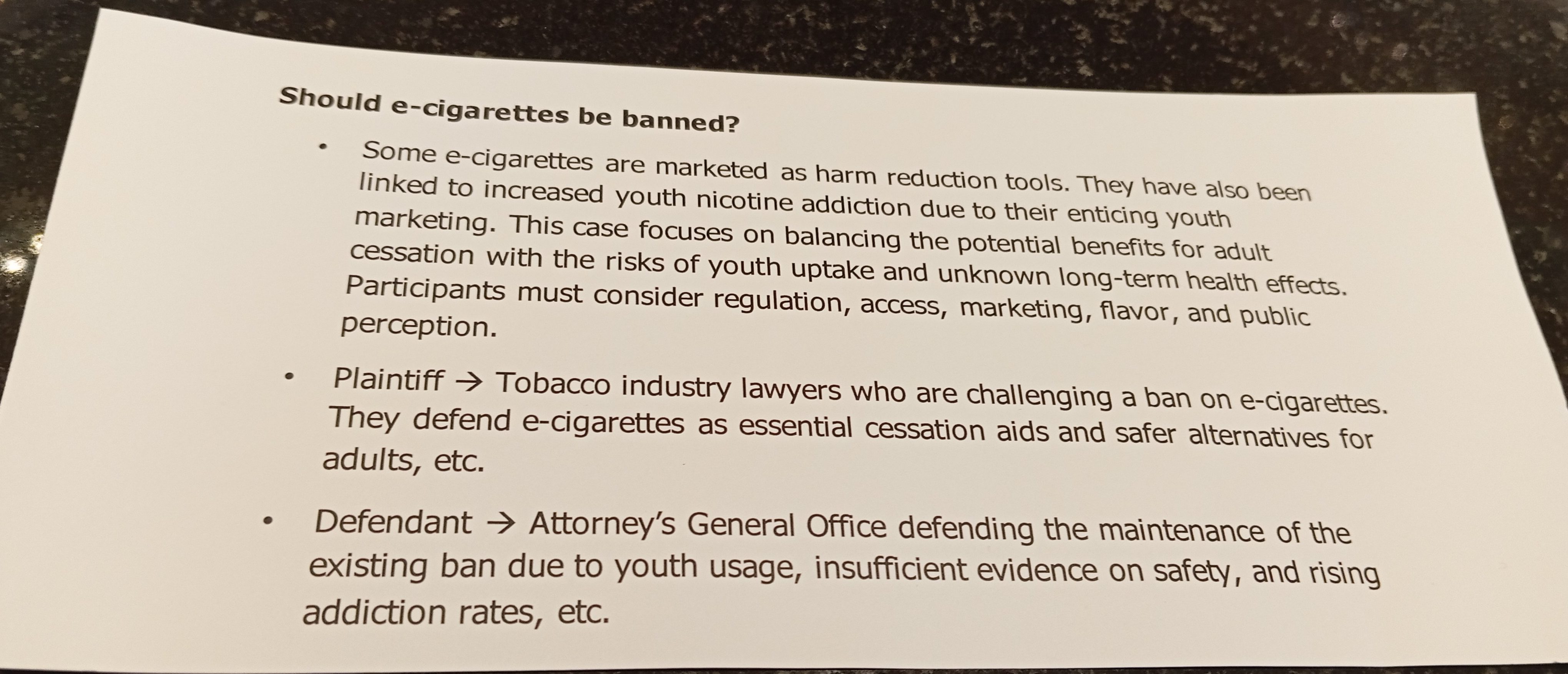
I had the opportunity to serve as the Judge in a mock hearing examining whether e-cigarettes should remain banned.
The tobacco control team argued that the ban should continue because of increasing youth use, limited evidence regarding long-term safety, and growing concerns about nicotine addiction. The opposing team, representing the tobacco industry, argued that e-cigarettes provide a safer alternative for adult smokers and support smoking cessation.
After carefully considering both arguments, I delivered my judgment:
The Court finds that the current public health risks outweigh the potential benefits. The existing ban should therefore remain in place pending robust evidence demonstrating the long-term safety and public health value of e-cigarettes. Judgment is entered in favour of the Defendant.
Although the exercise was hypothetical, it demonstrated the complexity of balancing scientific uncertainty, public health protection, and competing commercial interests.
Addressing Root Causes
The final technical session challenged participants to analyse the root causes of persistent tobacco control constraints and identify strategic opportunities to overcome them.
Rather than focusing solely on symptoms, the discussion encouraged us to think systematically about the underlying barriers that continue to hinder tobacco control progress and how leadership can drive meaningful change.
Celebrating Culture and Connection
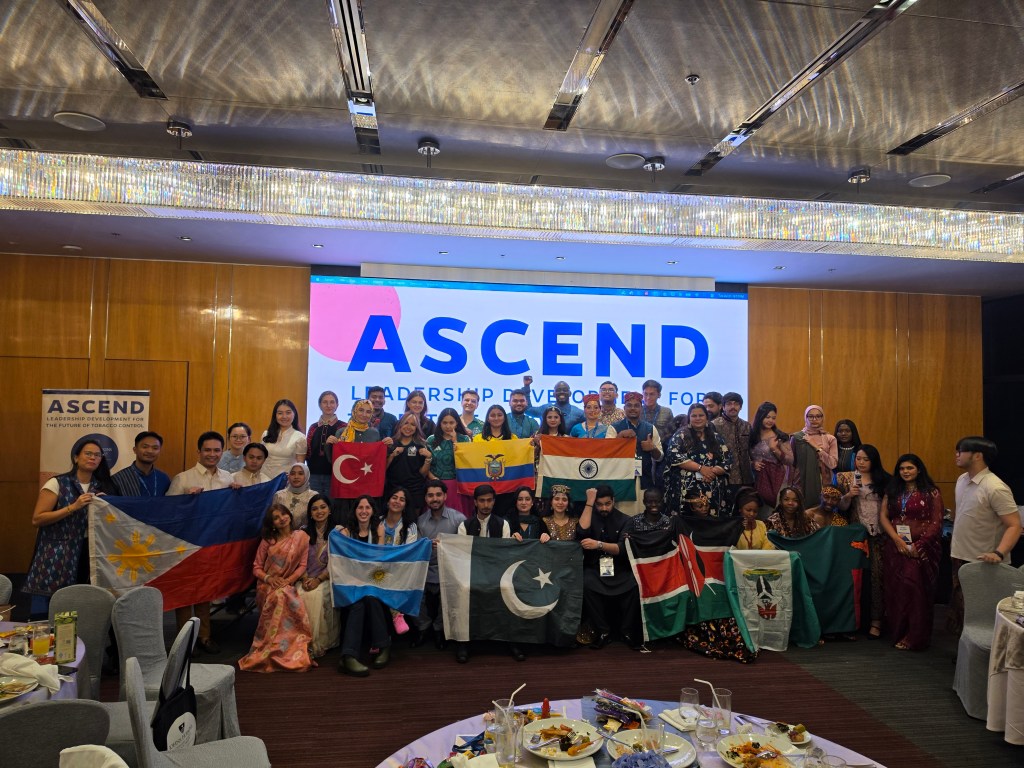
Following the day’s sessions, participants gathered for a Group Dinner and Cultural Exchange.
The evening provided an opportunity to celebrate the diversity represented within the fellowship while strengthening relationships beyond the classroom.
I had the privilege of performing my poem, “We Are Africa,” together with fellow Africans—Erick, Praise, Yvette, Naveen, Elizabeth, and Lady Dasola. Representing Kenya, Zambia, and Nigeria, we celebrated our shared African identity through poetry, music, dance, and storytelling.
The cultural exchange served as a reminder that although our backgrounds differ, our commitment to protecting public health is shared.
Final Reflection
Day Two highlighted the importance of combining evidence, strategic thinking, legal action, and collaboration to strengthen tobacco control. Whether analysing system constraints, exposing industry interference, participating in litigation exercises, or celebrating cultural diversity, every activity reinforced that effective leadership extends beyond technical expertise.
Meaningful progress in public health is achieved not only through sound policies but also through partnerships, critical thinking, and the courage to act in the public interest.
#Ascend2026 continues to be an inspiring journey of learning, leadership, and global collaboration.

