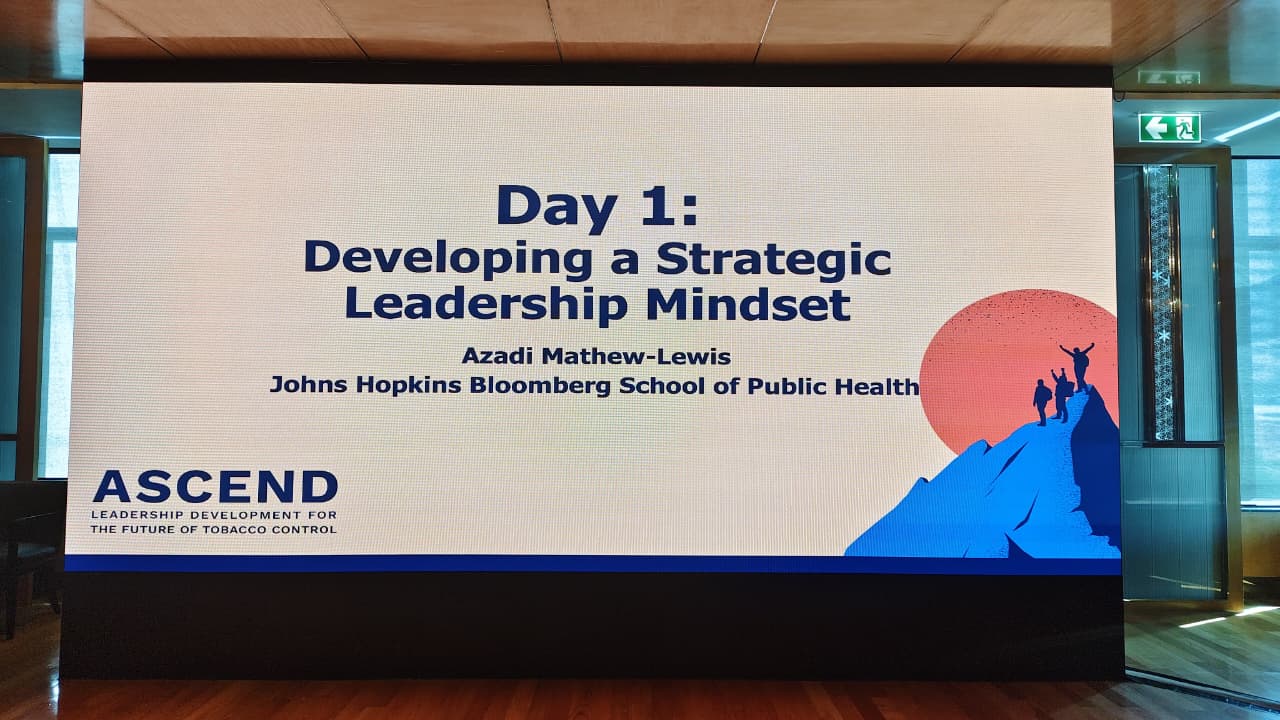
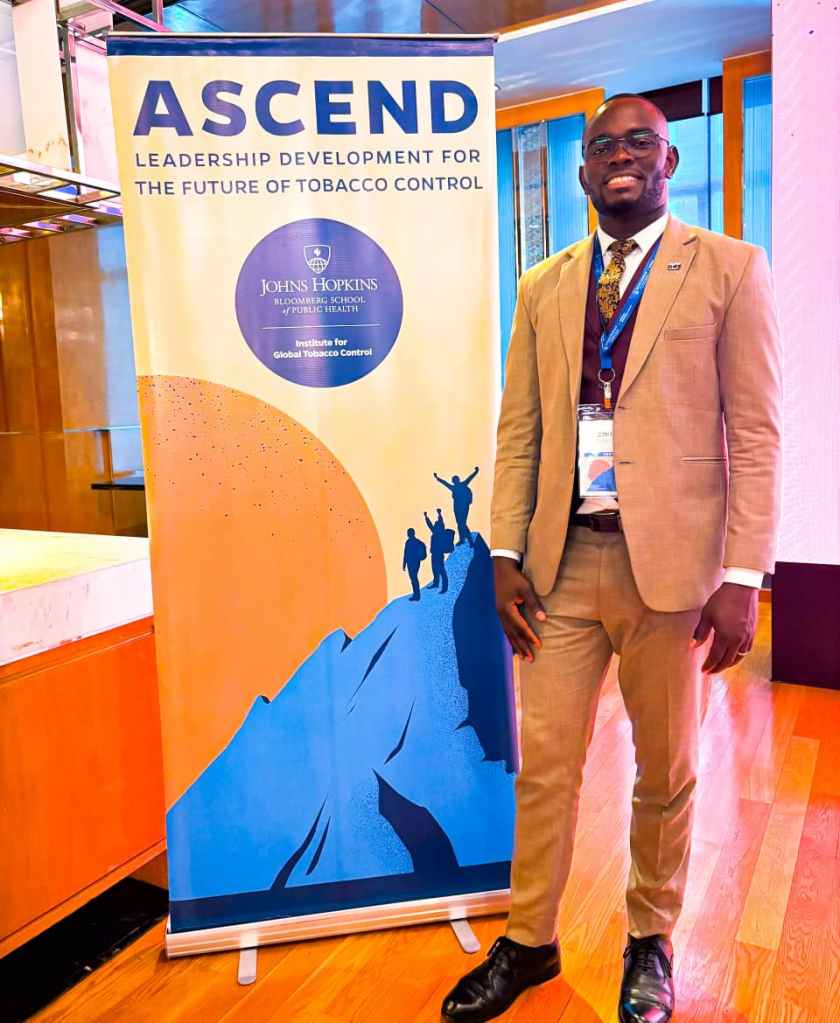
After an enriching few weeks of global learning—from #TIMRA2026 hosted by the Tobacco Control Research Group (TRCG) at the University of Bath to #ICO2026 hosted by the World Obesity Federation in Mexico—I have now arrived in Bangkok, Thailand, for #Ascend2026.
Each of these experiences has focused on a different aspect of public health. TIMRA deepened my understanding of tobacco industry monitoring and research, ICO expanded my perspective on obesity and non-communicable diseases, and Ascend begins with a focus on an equally critical ingredient for sustainable change: leadership.
Developing a Strategic Leadership Mindset
The first day of the fellowship began with an engaging icebreaker that encouraged participants to connect by sharing personal stories before moving into the first leadership session facilitated by Azadi on developing a strategic leadership mindset.
One of the strongest messages from the session was that effective leadership requires both strong character and high competence. Leadership is built on resilience and the ability to continue moving forward despite setbacks. The message resonated with the well-known principle: fall seven times, stand up eight.
We also revisited Stephen Covey’s Seven Habits of Highly Effective People, a framework I first encountered during the Young African Leaders Initiative (YALI) in 2019:
- Be Proactive
- Begin with the End in Mind
- Put First Things First
- Think Win-Win
- Seek First to Understand, Then to Be Understood
- Synergize
- Sharpen the Saw
Revisiting these habits several years later reminded me that effective leadership is grounded in intentional daily practice rather than isolated moments of inspiration.
From Coping to Leading
Another valuable lesson explored three different approaches to addressing challenges:
- Coping
- Managing
- Leading
While coping helps individuals navigate immediate difficulties and managing focuses on maintaining systems, leadership goes further by driving transformational change. It encourages teamwork, strengthens personal mastery, and creates environments where collaboration can thrive.
This perspective challenged us to think beyond solving today’s problems and instead focus on creating systems capable of producing long-term impact.
Learning Through Reflection
The morning concluded with a reflective discussion where fellows from different countries shared their understanding of leadership. The diversity of perspectives highlighted that leadership is shaped by different experiences, cultures, and contexts, yet united by a common purpose of serving others.
One particularly memorable activity asked us to illustrate our personal passions through drawings. Rather than introducing ourselves through speeches, we expressed what motivates us visually. It was inspiring to see the creativity across the room and to appreciate the many different pathways that have brought each fellow into public health leadership.
Looking Back to Move Forward
The afternoon focused on developing our Leadership Journey Maps.
This exercise encouraged us to reflect on the defining moments that have shaped our leadership journeys. As I built my timeline, I found myself returning to my years at Kenyatta University, where I first assumed student leadership roles at both the club and school levels. Those early opportunities to lead, organize, and advocate became the foundation for the public health leadership journey I continue to pursue today.
Sometimes leadership is best understood not by looking ahead, but by recognizing how far the journey has already come.
Building a Shared Vision
The day concluded with collaborative group work on developing a shared vision for tobacco control. Working alongside fellows from different countries demonstrated the strength of diverse experiences in solving complex public health challenges.
Although we come from different regions and work within different health systems, our conversations revealed a shared commitment to protecting populations from preventable diseases through stronger leadership, evidence-informed policy, and collaborative action.
Final Reflection
Day one of #Ascend2026 reinforced an important lesson: technical expertise alone is not enough to create lasting public health impact. Sustainable change requires leaders who can inspire people, build partnerships, navigate complexity, and unite diverse voices around a common purpose.
As the fellowship continues, I look forward to deepening these leadership skills and learning from an extraordinary community of advocates committed to advancing public health across the globe.

