
Ahead of the International Congress on Obesity (ICO) 2026 in Mexico, I had the opportunity to participate in the Obesity Lived Experience Global Summit, a dedicated pre-congress event that brought together people living with obesity, advocates, clinicians, researchers, and policymakers from around the world. The summit underscored a simple but powerful message: lived experience is essential evidence for shaping effective obesity policy and care.
The day began with welcome remarks from Johana Ralston, Chief Executive Officer of the World Obesity Federation, who emphasized the importance of building a strong global lived experience community capable of influencing policy and advancing person-centred obesity care. This was followed by a session exploring the global obesity policy landscape and the growing role of lived experience in informing health policy and advocacy.
One of the day’s most impactful presentations was delivered by Dr. Bruno Halpern, Incoming President of the World Obesity Federation. He painted a sobering picture of the global obesity epidemic, noting that more than one billion people are living with obesity and that approximately 82% of those affected reside in low- and middle-income countries. He also highlighted the enormous economic burden of obesity, projecting that by 2060 it could account for economic losses equivalent to 3% of the world’s Gross Domestic Product.
Dr. Halpern outlined five priority actions needed to strengthen the global response to obesity:
- Recognise obesity as a chronic disease.
- Regulate unhealthy food environments.
- Integrate obesity prevention and treatment into primary healthcare.
- Address and eliminate weight stigma.
- Invest in stronger health systems, particularly in low- and middle-income countries.
Stephen Ogweno then facilitated an engaging discussion on the value of lived experience as a form of evidence in obesity advocacy. The session reinforced that while scientific research provides critical evidence, personal experiences offer equally important insights into the barriers people face in accessing quality, respectful, and effective obesity care.
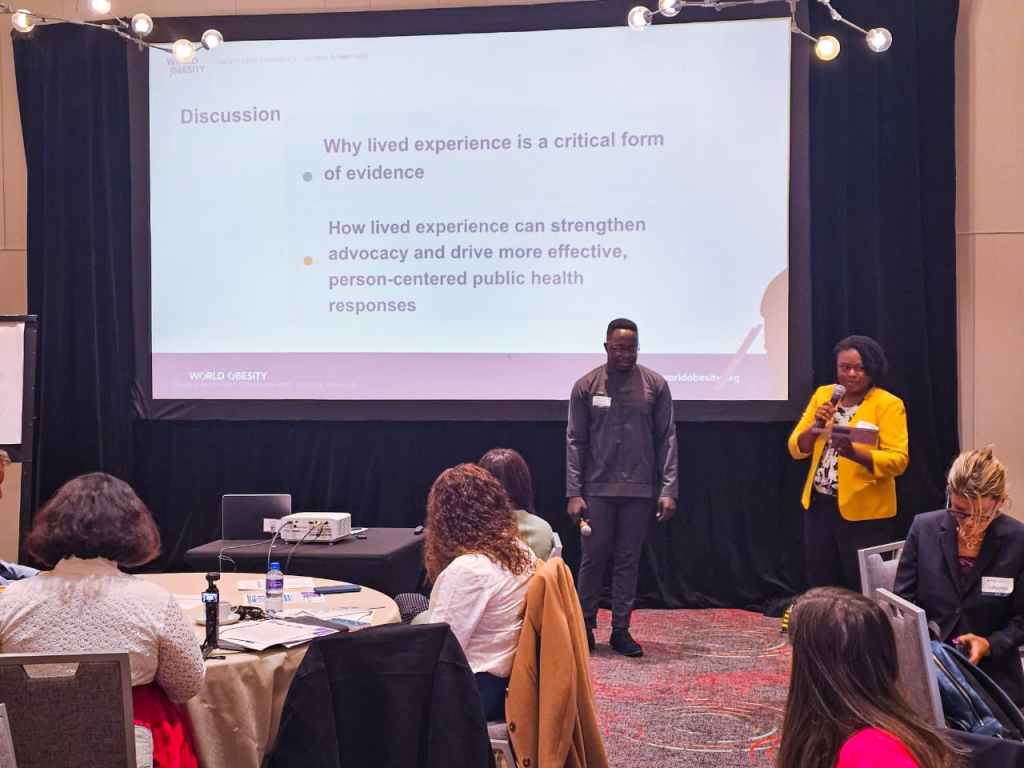
The panel discussion, From Personal Story to Policy Messages, featured advocates from different regions of the world who shared deeply personal experiences of living with obesity. Their stories highlighted the realities of stigma, discrimination, gaps in healthcare, and unequal access to treatment while demonstrating how lived experience can influence policy, strengthen advocacy, and inspire systems change.
Following the break, participants explored global obesity targets, the importance of positioning obesity within Universal Health Coverage, and strategies to improve equitable access to care. Interactive breakout sessions then focused on translating personal stories into actionable policy recommendations and using regional evidence to identify barriers, enabling factors, and country-specific priorities for advancing obesity care through Universal Health Coverage.
The Obesity Lived Experience Global Summit served as a powerful reminder that effective obesity policies cannot be developed without meaningfully engaging those most affected. The voices heard throughout the day demonstrated that lived experience is not only personal—it is evidence that should inform research, healthcare delivery, and policymaking.
As an obesity care advocate, I leave this summit inspired by the courage, resilience, and determination of people who shared their stories. Their experiences have strengthened my resolve to continue advocating for equitable, compassionate, and person-centred obesity care. Together, we can ensure that lived experience is not only heard but also translated into meaningful action that improves the lives of millions worldwide.
#ICO2026 #BeatObesity

