
What happens when resources are collected in the name of public health, but the public cannot clearly see the health impact of those resources?
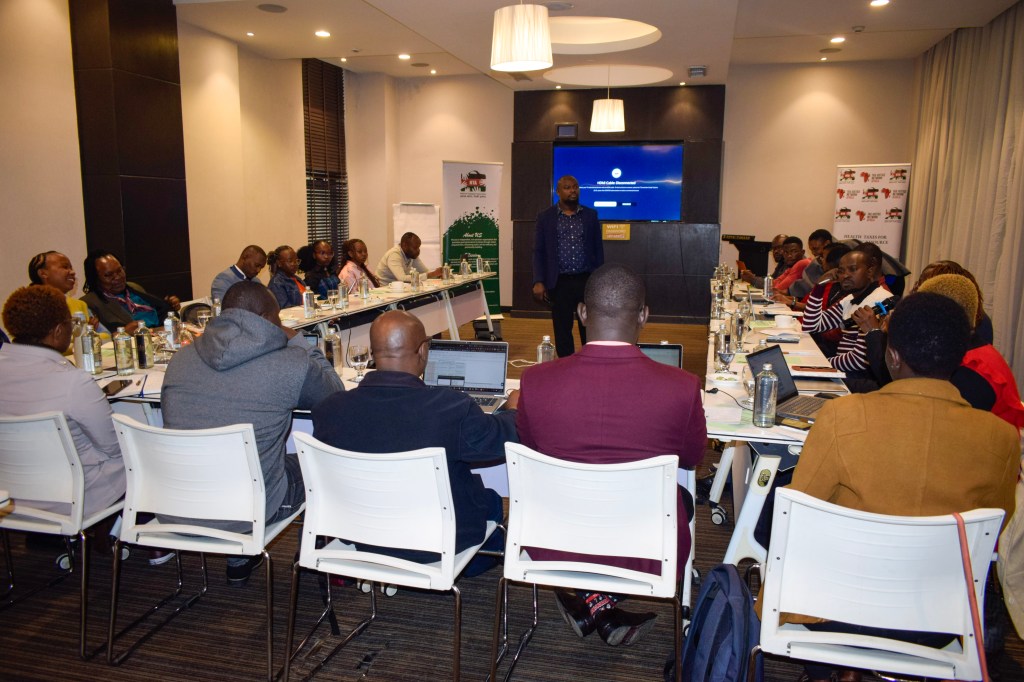
This was one of the questions that stayed with me after participating in a roundtable discussion on the Strategic Utilization of Kenya’s Solatium Fund for Health Financing and Tobacco Control, convened by the NTA.
The discussion brought together stakeholders to reflect on how Kenya can strategically and effectively utilize the Solatium Fund to strengthen health financing and tobacco control.
For tobacco control advocates, this is an important conversation because the Solatium contribution is linked to the Tobacco Control Fund, which is intended to support tobacco control activities.
The resources exist.
The question is whether they are being effectively translated into public health action.
The Auditor-General’s Findings Raise Important Questions
One of the most significant issues discussed was the findings contained in the Auditor-General’s report concerning the collection and management of the Tobacco Control Fund.
The Auditor-General issued a qualified opinion on the audited financial statements. In simple terms, a qualified opinion means that the auditor found that, although the financial statements may be fairly presented in most respects, there were specific material matters that could not be satisfactorily verified or were not adequately accounted for.
For a fund whose resources are intended to support public health, these exceptions deserve serious attention.
Among the issues highlighted during the discussion were concerns about the absence of a verified list of manufacturers and importers. This raises questions about whether there is a complete and reliable basis for determining the entities that are liable to contribute to the Fund.
There were also unexplained expenditure variances, making it difficult to establish why actual expenditure differed from reported or expected amounts.
Additionally, the audit identified unsupported receivables—amounts recorded as being owed to the Fund without sufficient supporting documentation to verify them.
These are not merely accounting issues.
They have implications for transparency, accountability and ultimately the ability of the country to use available resources to protect public health.

The Bigger Question: Where Is the Public Health Impact?
Perhaps the most concerning issue from the roundtable was the recognition that significant amounts of money are collected from tobacco manufacturers and importers, yet there appears to be little meaningful public health programming that can be clearly linked to these resources.
This raises an uncomfortable but necessary question:
If money is being collected from the tobacco industry to support tobacco control, where is the corresponding investment in tobacco control?
The purpose of such a fund should ultimately be reflected in tangible public health outcomes.
Resources should support interventions that strengthen tobacco control, protect young people from tobacco industry tactics, support cessation, improve monitoring and enforcement, generate evidence, strengthen public awareness and contribute to the implementation of tobacco control policies.
The existence of money in a fund is not, by itself, a public health achievement.
The impact that those resources generate is what matters.
Six Areas of Tobacco Control, One Responsibility
The Solatium contribution can support six core areas related to tobacco control.
This provides an opportunity for Kenya to strengthen tobacco control through predictable and dedicated financing.
But dedicated financing only makes a difference when resources are:
Collected → accounted for → allocated → spent → monitored → evaluated.
If any part of this chain breaks down, the public health value of the funding is compromised.
For tobacco control advocates, this is particularly important because Kenya continues to face significant challenges from tobacco use and tobacco industry interference.
We need resources to implement policies, conduct surveillance, support cessation, educate communities, monitor industry conduct and strengthen enforcement.
Without adequate and accountable financing, even well-designed tobacco control policies can remain largely on paper.
Tobacco Control Advocacy Must Cut Both Ways
There is an important principle that I took away from this discussion.
As tobacco control advocates, we must be willing to hold everyone accountable.
On one side, we confront the tobacco industry for manufacturing, marketing and selling products that cause disease and death. We challenge industry interference and the tactics used to recruit new consumers, particularly young people.
But accountability cannot stop at the industry.
We must also hold duty bearers and government agencies accountable for the resources collected from the industry and intended to support public health.
If manufacturers and importers are contributing resources to a tobacco control fund, government institutions have a responsibility to ensure that those resources are properly collected, transparently managed and effectively utilized.
Our advocacy therefore cuts both ways:
We challenge the industry for the harm caused by tobacco products, and we challenge duty bearers when resources intended to address that harm are not effectively used.
This is not about attacking institutions. It is about strengthening public accountability and ensuring that public health resources achieve their intended purpose.
From Revenue Collection to Public Health Action
Kenya should not be satisfied with simply collecting the Solatium contribution.
We need to know:
- How much is being collected?
- Which manufacturers and importers are contributing?
- Are all liable entities captured?
- How much is currently held by the Fund?
- How much has been allocated to tobacco control?
- What programmes have been funded?
- What have those programmes achieved?
- How are expenditures being monitored?
- What mechanisms exist to ensure accountability?
These questions are essential if we are to move from revenue collection to meaningful public health action.
Transparency is not an administrative burden. It is a fundamental component of effective health financing.
A Missed Opportunity We Can Still Correct
Kenya has an opportunity to make the Solatium Fund an important instrument for tobacco control and broader public health financing.
But that will require stronger financial management, transparent reporting, proper identification of contributors, clear allocation of resources and demonstrable investment in tobacco control programmes.
Most importantly, there must be a clear connection between the money collected and the public health outcomes achieved.
Every shilling collected for tobacco control should have a clear public health purpose.
The people of Kenya should not have to wonder whether resources collected to protect them from tobacco-related harm are actually being used to do so.
Accountability Must Remain at the Centre
I left the roundtable convinced that tobacco control advocacy must continue to focus not only on policy development, but also on implementation, financing and accountability.
A strong tobacco control framework requires resources.
But resources without accountability can fail to deliver impact.
As advocates, we therefore have a responsibility to keep asking difficult questions, demanding transparency and ensuring that commitments made in tobacco control translate into action.
Thank you to NTA for convening this important roundtable and providing a platform for stakeholders to interrogate the strategic utilization of the Solatium Fund.
The tobacco industry must be held accountable for the harm caused by its products.
And government institutions must equally be held accountable for ensuring that resources collected for public health are used transparently, strategically and effectively.
Because tobacco control is not only about having policies. It is about financing those policies—and making sure the money delivers for public health.
#TobaccoControl #SolatiumFund #HealthFinancing #PublicHealth #Accountability #NCDPrevention #Kenya

