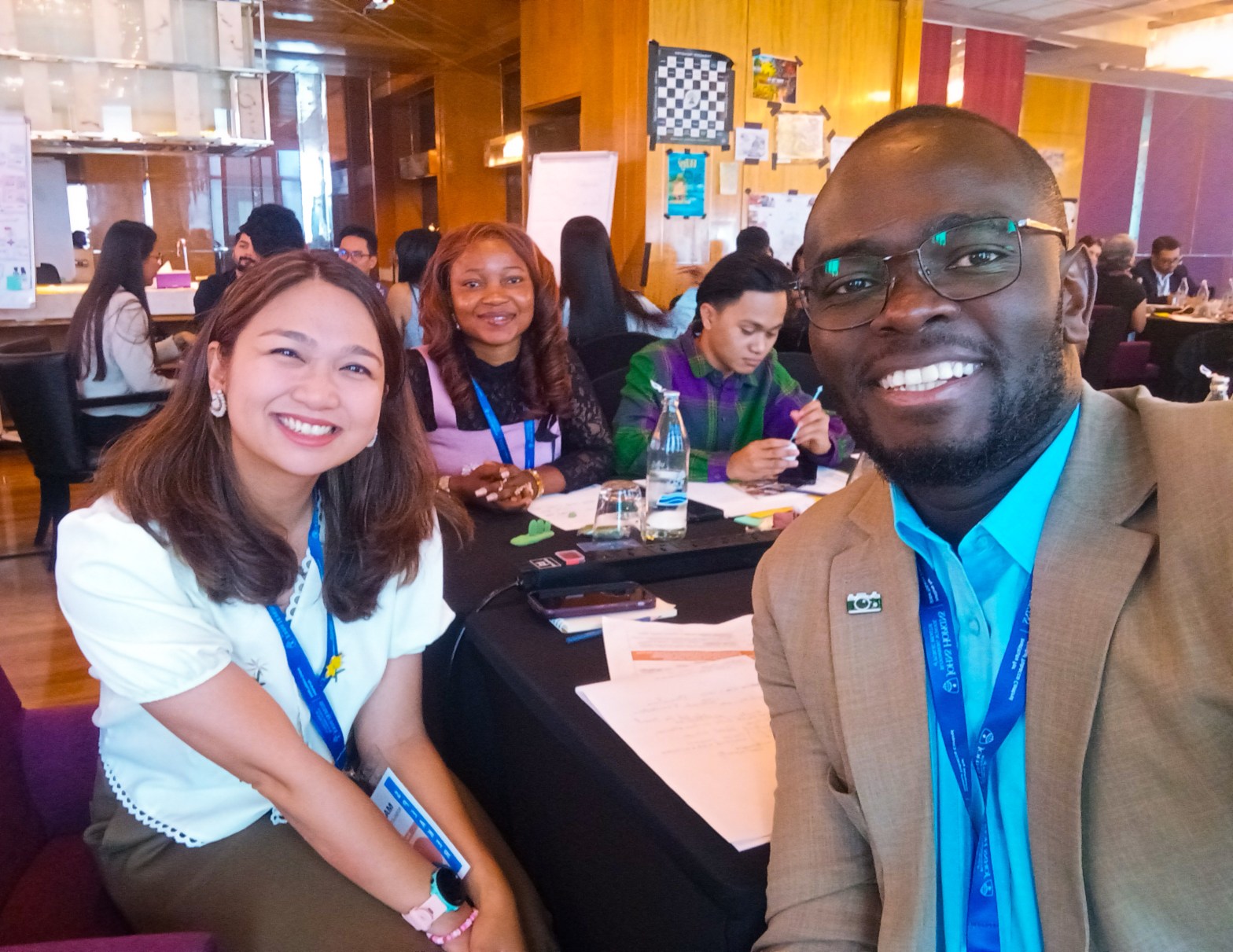
The fifth and final day of the Ascend Fellowship marked the culmination of an intensive week of learning, collaboration, and leadership development. It was a day dedicated to hearing from experienced tobacco control professionals, showcasing the work each group had developed throughout the fellowship, and reflecting on the journey we had shared together.
While the formal programme came to an end, it became evident that the relationships and collaborations built during the week were only beginning.
Learning from Leaders in Tobacco Control
The day opened with a series of roundtable discussions that provided participants with the opportunity to engage directly with professionals working across different areas of global tobacco control.
These one-on-one conversations allowed us to ask questions, seek career advice, and better understand the realities of advancing tobacco control in different contexts.
We had the privilege of engaging with experts including Ada Moadsiri from the World Health Organization (WHO), Tara Singh Bam from Vital Strategies, Tanya Hamada from Campaign for Tobacco-Free Kids (CTFK), Ma-Anne Rosales-Sto. Domingo from the McCabe Centre for Law & Cancer, Nuntavarn Vichit-Vadakan from the WHO FCTC Knowledge Hub for Article 5.3, Natalia Hyrb from the Public Health Center of the Ministry of Health of Ukraine, and Samantha Ackary, an Ascend alumna.
Each conversation offered unique perspectives on leadership, policy advocacy, litigation, research, and international collaboration.
Among the many valuable lessons shared, one of the most memorable came from Tanya Hamada, who encouraged us to assess tobacco control advocacy through three important dimensions:
- Power: Can we win it? Is the proposed change politically feasible?
- Precision: Can we defend our position using strong evidence?
- Practice: Can we sustain the intervention over time?
This simple framework captured the balance between ambition, evidence, and long-term implementation that is essential for successful public health advocacy.
Another important insight came from Ma-Anne Rosales-Sto. Domingo, who described the role of tobacco control advocates in four powerful words:
Promote. Protect. Defend. Sustain.
These principles serve as an enduring reminder that advocacy extends far beyond policy adoption. Effective tobacco control requires continuous effort to safeguard progress against emerging challenges and industry interference.
Stories That Inspire
The morning also featured inspiring presentations from leaders whose personal journeys reflected the diverse pathways into tobacco control advocacy.
Bungon Ritthiphakdee from the Global Center for Good Governance in Tobacco Control shared her professional journey and the lessons she has learned from decades of leadership in global tobacco control.
We also heard from fellow Ascend participant Navee Matthews Simwingi, who demonstrated how creativity can become a powerful advocacy tool. Drawing upon his background in acting, he has developed engaging tobacco control content for social media, significantly expanding his reach and connecting with audiences that traditional advocacy approaches may struggle to engage.
His story was a powerful reminder that everyone brings unique talents to public health, and those talents can become powerful catalysts for change.
Presenting Our Advocacy Strategy
The afternoon was dedicated to the final group presentations.
Over the course of the week, participants had progressively built comprehensive advocacy strategies by applying each of the analytical tools introduced during the fellowship.
As members of the Blue Warriors, our team presented recommendations for the hypothetical country of Blue Island.
Using the Spidergram, we identified the key constraint within the country’s tobacco control system. Our Fishbone Analysis then explored the underlying causes of that constraint, while stakeholder mapping helped us identify the Ministry of Health as our priority audience.
Based on this analysis, we recommended that the Ministry of Health implement a comprehensive public education programme on smoke-free policies.
Although Blue Island had strong smoke-free legislation, our analysis showed that compliance remained low because many members of the public lacked awareness and understanding of the existing policies. We concluded that strengthening public education would improve compliance, increase community ownership, and ultimately enhance the effectiveness of the country’s smoke-free regulations.
Presenting this work demonstrated how systems thinking, evidence, stakeholder analysis, storytelling, and strategic communication can be integrated into a practical advocacy strategy.
A Bittersweet Farewell
As the presentations concluded, it was time to say goodbye.
Like many fellowships, Ascend officially ended with closing remarks and farewells. Yet, unlike many programmes, it left participants with something that extends far beyond certificates and photographs.
Throughout five intensive days, strangers became teammates, teammates became friends, and friendships evolved into a global network of advocates committed to advancing tobacco control.
Although we return to different countries and organisations, we remain connected by a shared mission: protecting current and future generations from the harms of tobacco.
Final Reflection
Reflecting on the past five days, I leave Bangkok with much more than new technical knowledge.
I leave with a deeper appreciation of systems thinking, stronger leadership skills, practical advocacy tools, and renewed confidence in the power of collaboration.
From identifying problems through Spidergrams and Fishbone Analysis, to mapping stakeholders, developing evidence-informed recommendations, using storytelling to influence policy, and presenting strategic advocacy plans, the fellowship provided a comprehensive framework for advancing tobacco control in complex policy environments.
Most importantly, Ascend reminded me that lasting public health change is never achieved alone. It is built through partnerships, shared learning, and courageous leadership.
As one chapter closes, another begins. I look forward to applying these lessons in my work and continuing to collaborate with the incredible network of leaders I had the privilege of meeting at #Ascend2026.

