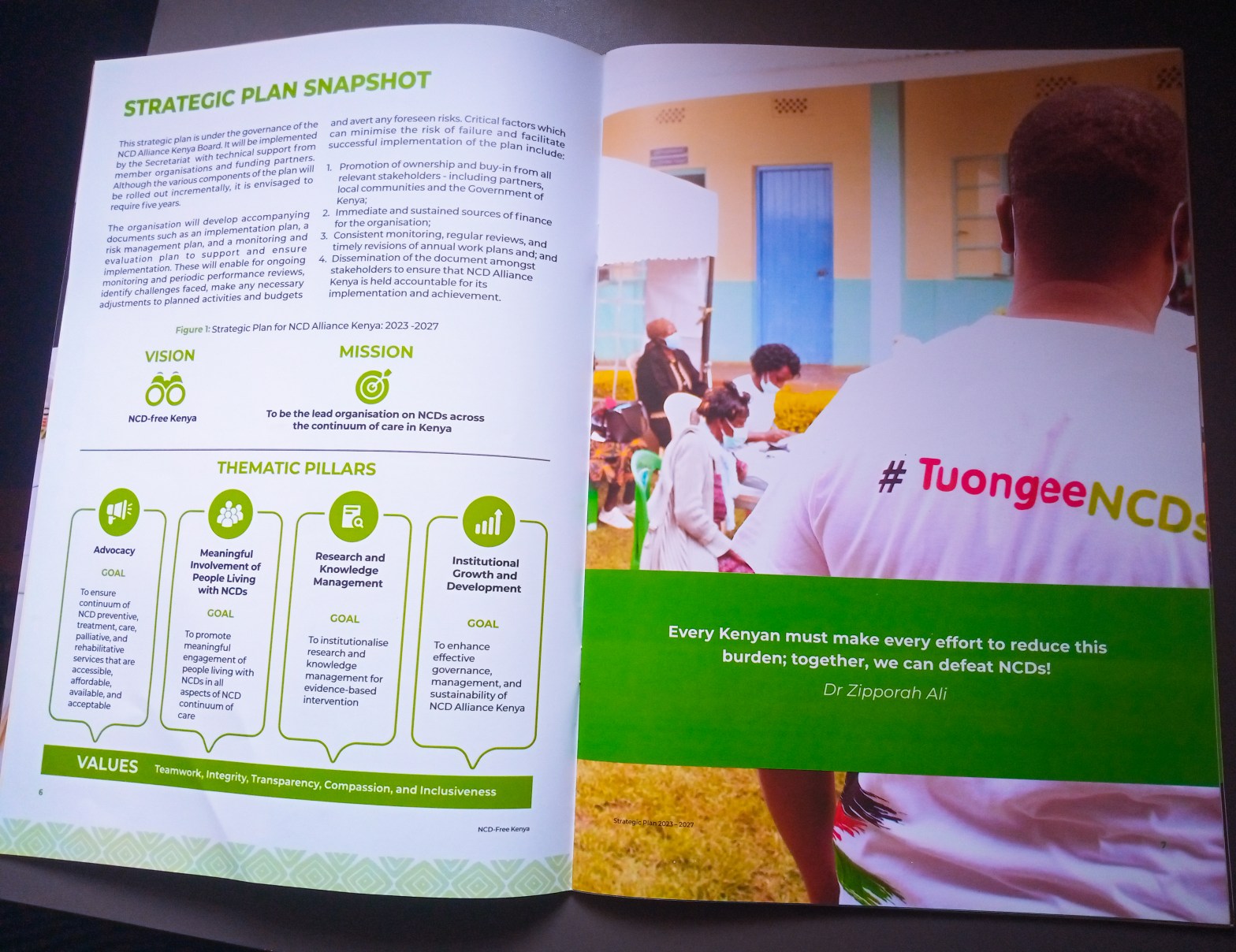
On the 7th of June 2023, I joined the Non-communicable Diseases Alliance Kenya (NCD Alliance Kenya), in my capacity as Stowelink‘s Chief Programs Officer, to launch the 2023-2027 Strategic Plan for tackling chronic diseases in Kenya. The plan provides a roadmap toward reducing preventable morbidity, mortality, and disability due to non-communicable diseases (NCDs) in Kenya. The thematic pillars underpinning this Strategic Plan include;
- Advocacy. The goal of this pillar is to ensure a continuum of NCD preventive, treatment, care, palliative, and rehabilitative services that are accessible, affordable, available, and acceptable.
- Meaningful involvement of people living with NCDs in all aspects of the NCD continuum of care.
- Research and knowledge management to ensure evidence-based interventions.
- Institutional growth and development to enhance effective governance, management, and sustainability of NCD Alliance Kenya.

Speaking during the launch, Dr. Issak Bashir, the Head of the Department of Family Health in the Ministry of Health, noted that the Strategic Plan 2023-2027 could not have come at the right time. He observed that since Kenya is experiencing an epidemiological transition from communicable diseases to NCDs, there is a growing body of need for a concerted effort to address NCDs prevention and management gaps to achieve the desired health outcomes.
According to the World Health Organization (WHO), 74% of all deaths globally are attributed to NCDs. In Kenya, it is reported that about 55% of all hospital admissions and 50% of all hospital deaths are attributable to NCDs. Dr. Ephantus Maree, the Head of the NCD Division at the Ministry of Health, however, noted that NCDs account for 41 percent of deaths in Kenya (probably referring to health facility deaths and those that occur at home). These statistics send shock waves, yet also inspire health actors to ramp up action to reverse these unfortunate trends. I am optimistic that this strategic plan will help to accelerate the achievement of NCD goals. The plan will profoundly contribute to health system strengthening as far as NCDs prevention and management is concerned. Additionally, it puts Kenya on the path towards achieving Sustainable Development Goal number 3 (Good Health and Well-being) and Target 3.4 which seeks, By 2030, to reduce by one-third premature mortality from non-communicable diseases through prevention and treatment and promote mental health and well-being.

While the strategic plan is under the governance of the NCD Alliance Kenya, it is noteworthy that for Kenya to realize significant outcomes, there must be a multi-sectoral collaboration to support its implementation. Member organizations and funding partners must come together to collectively implement it. NCD Alliance Kenya observed that there are critical factors that can minimize the risk of failure and facilitate the successful implementation of the plan. They include;
- Dissemination of the document amongst stakeholders to ensure that NCDAK is held accountable for its implementation and achievement.
- Promotion of ownership and buy-in from all relevant stakeholders including funding partners, the national and county government, member organizations, and the private sector among others.
- Immediate and sustained sources of finance for NCDAK.
- Consistent monitoring, regular reviews, and timely revisions of annual work plans.
NCD Alliance Kenya must be accorded the necessary support to implement this strategic plan and make Kenya NCD-free. This plan will not only lead to greater health outcomes but will also help address other social and economic ramifications of NCD such as productivity loss and catastrophic costs associated with managing chronic conditions.
As a paid-up member of the NCD Alliance Kenya, my organization (Stowelink) pledges its support to this strategic plan. As an organization, we laud NCDAK for leading in developing this technical package. Let us make the “NCD-free Kenya” vision a reality.
 ODUOR KEVIN
Good job Kevin.
LikeLike