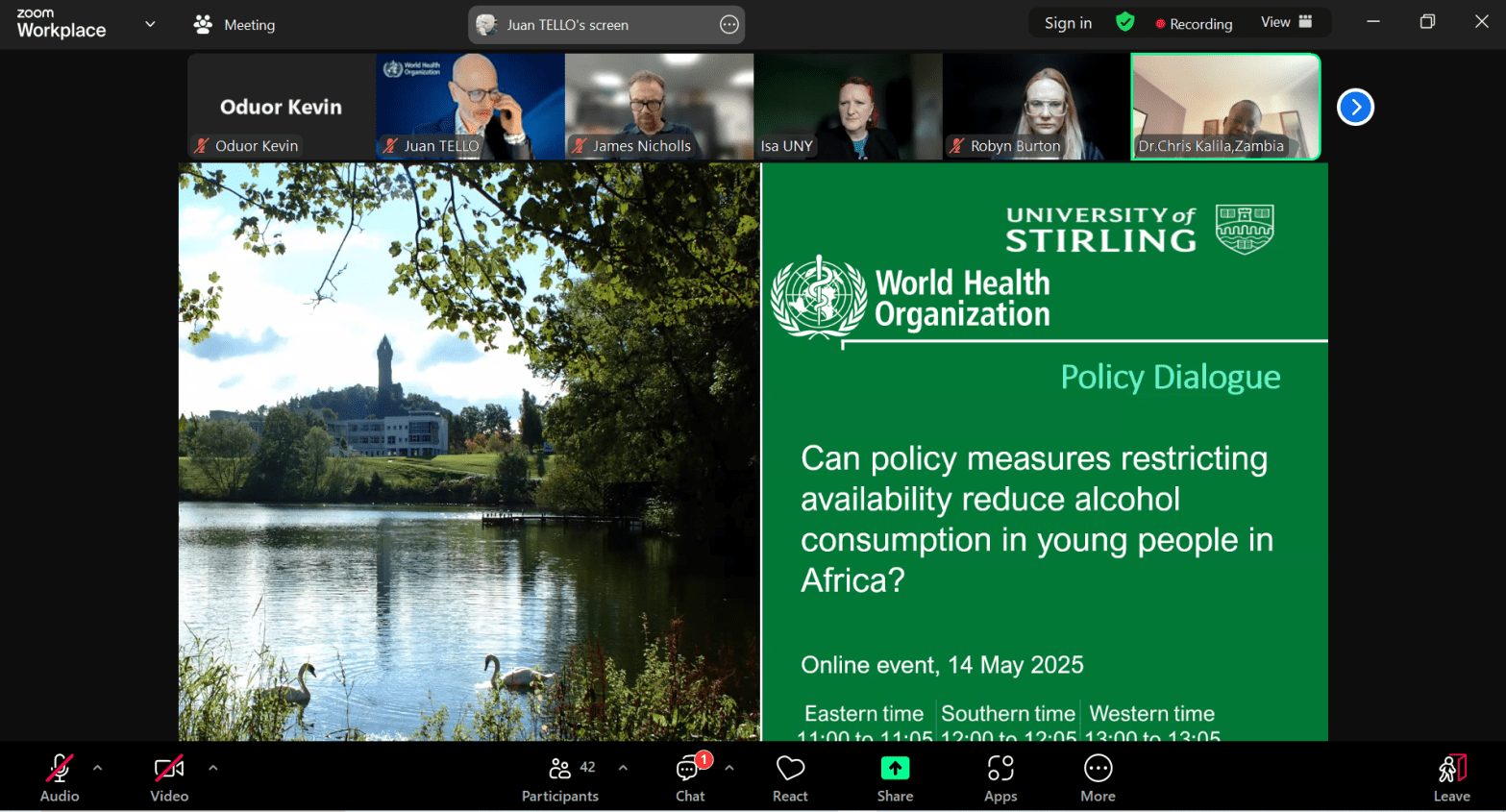
Today [14th May 2025], I had the opportunity to participate in a thought-provoking alcohol policy dialogue for the Africa region titled “Can policy measures restricting availability reduce alcohol consumption in young people in Africa?” The event was co-organized by the University of Stirling (UK) and the World Health Organization’s Less Alcohol Unit, and brought together leading public health experts, researchers, and advocates from across the continent.
The session was moderated by Dr. Aldehid Onyango, Director for Universal Health Coverage/Healthier Populations at WHO, who set the tone with an overview of the alcohol-related health burden in Africa and the policy landscape. As she ushered the plenary speakers, she underscored the importance of multi-sectoral action to tackle alcohol harm, especially among Africa’s young population.
Keynote Presentation: Dr. Fikru T. Tullu, WHO Afro
Dr. Fikru T. Tullu provided an overview of the state of alcohol consumption in the WHO African Region, sharing alarming global and regional data. Key take away from his presentation include;
- Alcohol was responsible for approximately 2.6 million deaths globally in 2019.
- In the African region, the age-standardized alcohol-related death rate is 52.2 per 100,000 population.
- The average per capita consumption in the African region is 4.8 litres, with a stark gender divide: 7.8L for men and 1.8L for women.
Despite global advocacy, Dr. Tullu mentioned that alcohol consumption has remained relatively stable in Africa from 2000 to 2016, a time when the global per capita consumption has decreased from 5.7L to 5.5L. This marginal decline is insufficient to meet the global targets.
Challenges to Alcohol Control in Africa
Dr. Tullu identified several barriers undermining alcohol regulation efforts in the region including;
- Weak and limited regulatory frameworks.
- Industry interference in policymaking.
- Proliferation of cheap, packaged alcohol in sachets and small bottles.
- Widespread informal and illegal brewing and distillation among others.
However, hope remains. The African region has adopted the Framework for Implementing the Global Alcohol Action Plan, 2022–2030, supported by the SAFER Technical Package — a WHO initiative offering cost-effective strategies to reduce alcohol harm.
Dr. Tullu concluded with a compelling economic argument: Every USD $1 invested in alcohol prevention yields USD $8.32 in return on investment — a powerful incentive for governments to act.
Evidence from the Field: Dr. Emeka Dumbili
Dr. Emeka Dumbili, from the University College Dublin, offered a deep dive into local evidence around youth alcohol use in Africa. He highlighted socio-economic and cultural drivers that lead young people to consume alcohol, including peer pressure, media influences, and urbanization.
He also shared recent per capita consumption data, naming Seychelles, Uganda, and Tanzania among the countries with the highest alcohol consumption rates globally. His analysis underscored the urgency of tailored, data-driven policy responses across the continent.

East African Breakout Session: Local Realities and Policy Experiences
In the East African breakout room, we heard two enlightening presentations:
Policy Lessons from Malawi and Uganda – Prof. Nazarius Mbona Tumwesigye
Prof. Nazarius Tumwesigye from Makerere University detailed Malawi’s experience in regulating alcohol packaging and supply. His analysis demonstrated how strong political will and policy coherence can limit the availability of harmful alcohol products, particularly those packaged in small, high-alcohol content containers (sachets).
Kenya’s Youth at Risk – Dr. Patrick Mwangala
Dr. Patrick Mwangala presented startling statistics from Kenya, where alcohol use is worryingly high among emerging adults aged 18–24, with a 24% prevalence rate. He emphasized the urgent need for policy interventions targeting youth, particularly in urban and peri-urban areas.

The Way Forward
This dialogue highlighted a clear path: policy measures that restrict availability are vital to reducing youth alcohol consumption in Africa. Whether through taxation, marketing restrictions, licensing reforms, or packaging regulations, governments have proven tools at their disposal. What’s required now is bold political will and protection from industry interference.
As alcohol continues to erode health systems, fuel non-communicable diseases, and stifle Africa’s youth potential, we must act decisively.


This is very informative, and you did a great job summarising today’s event’s takeaways.
LikeLike
Thank you. You gave a brilliant presentation. Congratulation.
LikeLike