
Today marked a significant milestone in tobacco control efforts in Kenya with the release of new findings by the Kenya Tobacco Industry Monitoring & Response (TIMR) Team. The study examines how the tobacco industry and its influencers are increasingly utilizing social media platforms to market and promote tobacco and nicotine products. I had the privilege of presenting these findings on behalf of the lead researchers, Dr. Nyambura Salome and Winnie Ivayo, whose work provides critical insights into emerging industry tactics.
Kenya has made notable progress in tobacco control through the Tobacco Control Act of 2007 and the Tobacco Control Regulations of 2014, both of which prohibit tobacco advertising, promotion, and sponsorship in traditional media. However, the rapid expansion of digital platforms has created new and complex marketing environments that were not explicitly anticipated in the existing legal framework. This study highlights how these gaps are being exploited by the tobacco industry to sustain and expand its reach, particularly among young people.
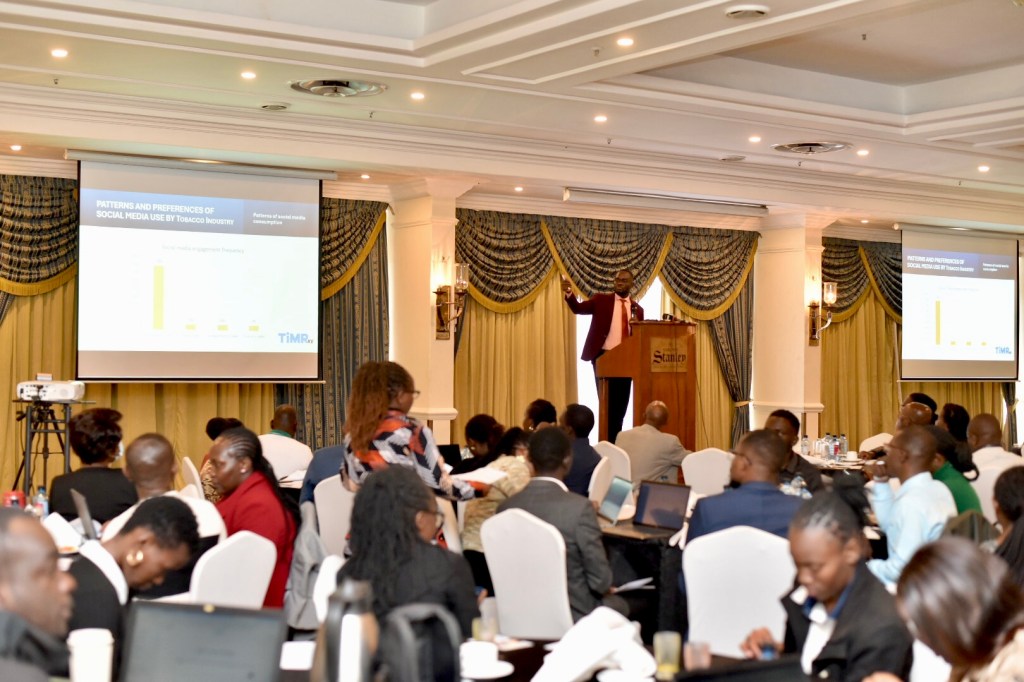
The urgency of addressing these issues cannot be overstated. Tobacco-related diseases are estimated to cause approximately 12,000 deaths annually in Kenya. This translates to about 33 deaths every day, underscoring the significant public health burden associated with tobacco use. The study reveals that 86 percent of respondents reported encountering tobacco-related content online, with a substantial proportion exposed through photos and videos. These findings demonstrate the scale and effectiveness of digital marketing strategies employed by the industry.
One of the most concerning aspects of the study is the identification of specific recruitment criteria used by the tobacco industry to engage influencers. These include targeting individuals with strong youth followings, aligning with lifestyle and aspirational content, and prioritizing those willing to conceal sponsorship arrangements. Influencers perceived as low-risk and relatable are particularly attractive to the industry, especially when they are financially susceptible. This strategic use of influencers allows the tobacco industry to normalize tobacco use and embed it within everyday digital experiences.
The study also highlights several critical policy and enforcement gaps. Digital marketing is not explicitly defined within current tobacco legislation, creating ambiguity in regulation and enforcement. Influencer marketing operates in grey areas where disclosure and accountability are limited. Additionally, cross-border digital promotion complicates regulatory oversight, while online sales often lack adequate age-verification mechanisms. The rise of ephemeral content, which disappears after a short period, further challenges monitoring and evidence collection.

Addressing these challenges requires an urgent and coordinated response. Government ministries, regulatory agencies, academia, civil society, the media, and young people themselves must work collaboratively to close these digital loopholes. Strengthening policy frameworks, enhancing enforcement mechanisms, and improving public awareness are essential steps in protecting populations, particularly youth, from the harmful influence of tobacco marketing.
This study serves as both a warning and a call to action. As the tobacco industry continues to evolve its strategies, so too must our approaches to regulation, monitoring, and public health advocacy. Protecting the next generation from tobacco-related harm demands vigilance, innovation, and sustained collaboration.
 ODUOR KEVIN