
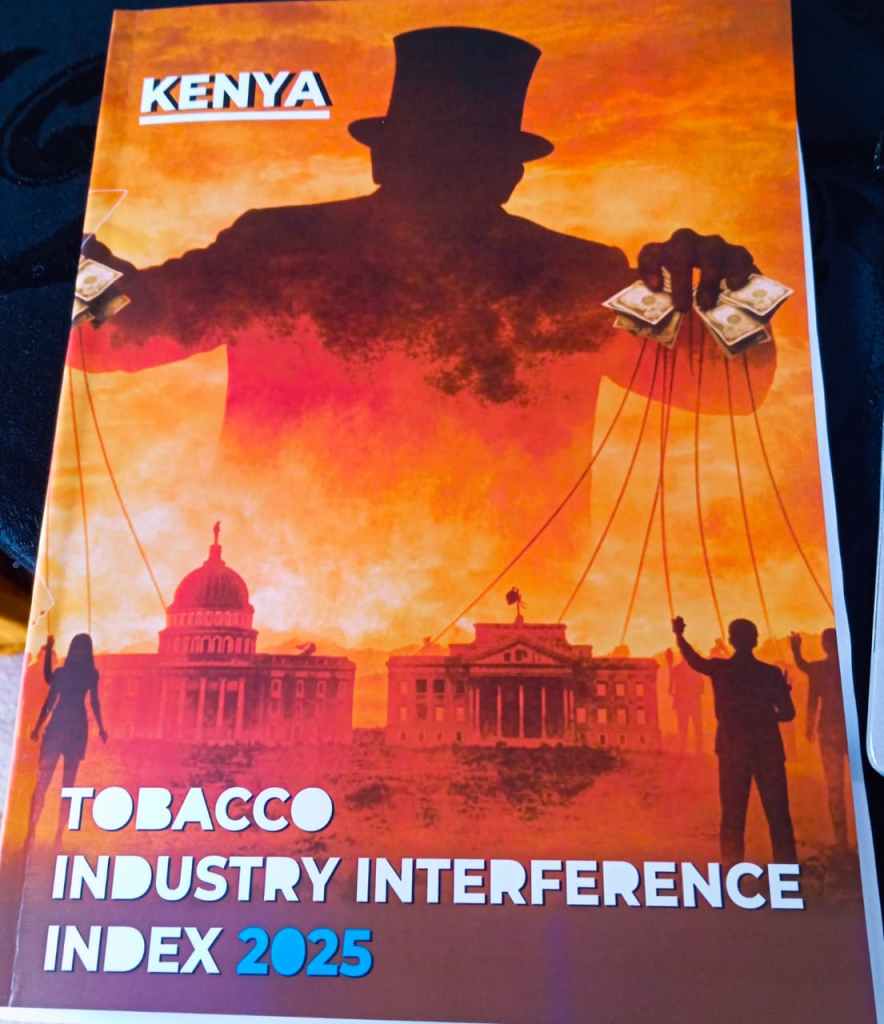
According to the Kenya Tobacco Industry Index 2025 launched by the Kenya Tobacco Control and Health Promotion Alliance (KETCA), Kenya has been ranked 19th out of 100 countries in the 2025 Global Tobacco Industry Interference Index, with a score of 46. Among the 20 African countries assessed, Kenya ranks 6th. However, the increase in Kenya’s score from 40 in 2020 to 46 in 2025 signals growing tobacco industry influence in public health policy spaces, placing the country among those experiencing moderate to high levels of interference.
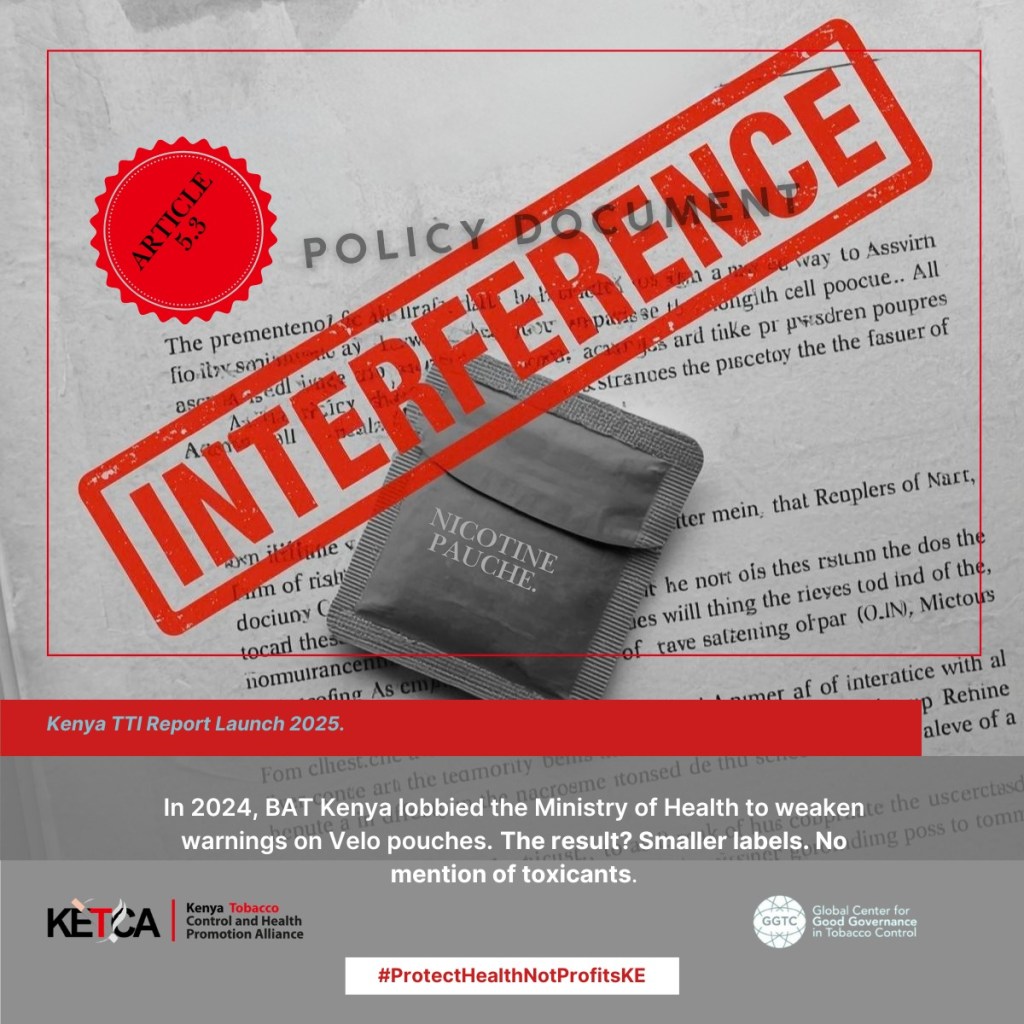
The report highlights several concerning trends. These include tobacco industry participation in policy development, such as lobbying efforts by British American Tobacco (BAT) regarding health warning requirements for its nicotine pouch product (VELO). The report also notes that BAT reportedly threatened to cancel planned investment in a new manufacturing facility for emerging nicotine products, a move that reportedly influenced the approval of smaller graphic warnings for toxicants.
The Index also raises concerns about tobacco-related corporate social responsibility (CSR) activities. An alleged collaboration between BAT and the Ministry of Health in a health campaign targeting long-distance drivers was reported, although the Ministry of Health denied involvement while BAT confirmed participation.
The findings further reveal instances of direct engagement between the tobacco industry and government, including BAT’s request for a 9–12 month transition period to deplete existing stocks of VELO before complying with regulatory requirements. Additionally, the report highlights gaps in conflict-of-interest safeguards, including limited disclosure mechanisms and insufficient monitoring of interactions between government officials and the tobacco industry.
During the launch, global experts emphasized that no country is immune to tobacco industry interference. It was noted that 18 countries have strengthened protections by adopting or enforcing measures aligned with Article 5.3 of the WHO Framework Convention on Tobacco Control, which protects public health policies from industry influence. At the same time, over 60 countries still lack adequate safeguards against tobacco industry interference.
Encouragingly, progress has been made globally, with at least 46 countries banning e-cigarettes and heated tobacco products, including Cabo Verde, Ethiopia, and The Gambia. Experts also emphasized the importance of conflict-of-interest safeguards, including exit policies that prevent government officials from joining the tobacco industry immediately after leaving public office. In Kenya, such a transition period is three years, compared to two years in Uganda.
Experts from the Africa Tobacco Control Alliance also highlighted the importance of regional collaboration in combating tobacco industry interference. One promising approach is the establishment of Tobacco Industry Monitoring (TIM) Teams, which play a critical role in identifying, exposing, and countering industry tactics that undermine tobacco control policies.
🎤 The launch concluded with a panel discussion exploring the role of government, civil society, and youth in protecting public health policies. Reflecting on Kenya’s ranking, panelists largely agreed that the country’s score represents a missed opportunity rather than a success, calling on all actors in the tobacco control space to strengthen efforts to protect health policies from industry influence.
📖 The full report can be accessed here:
https://globaltobaccoindex.org/country/KE
#ProtectHealthNotProfitsKE
 ODUOR KEVIN