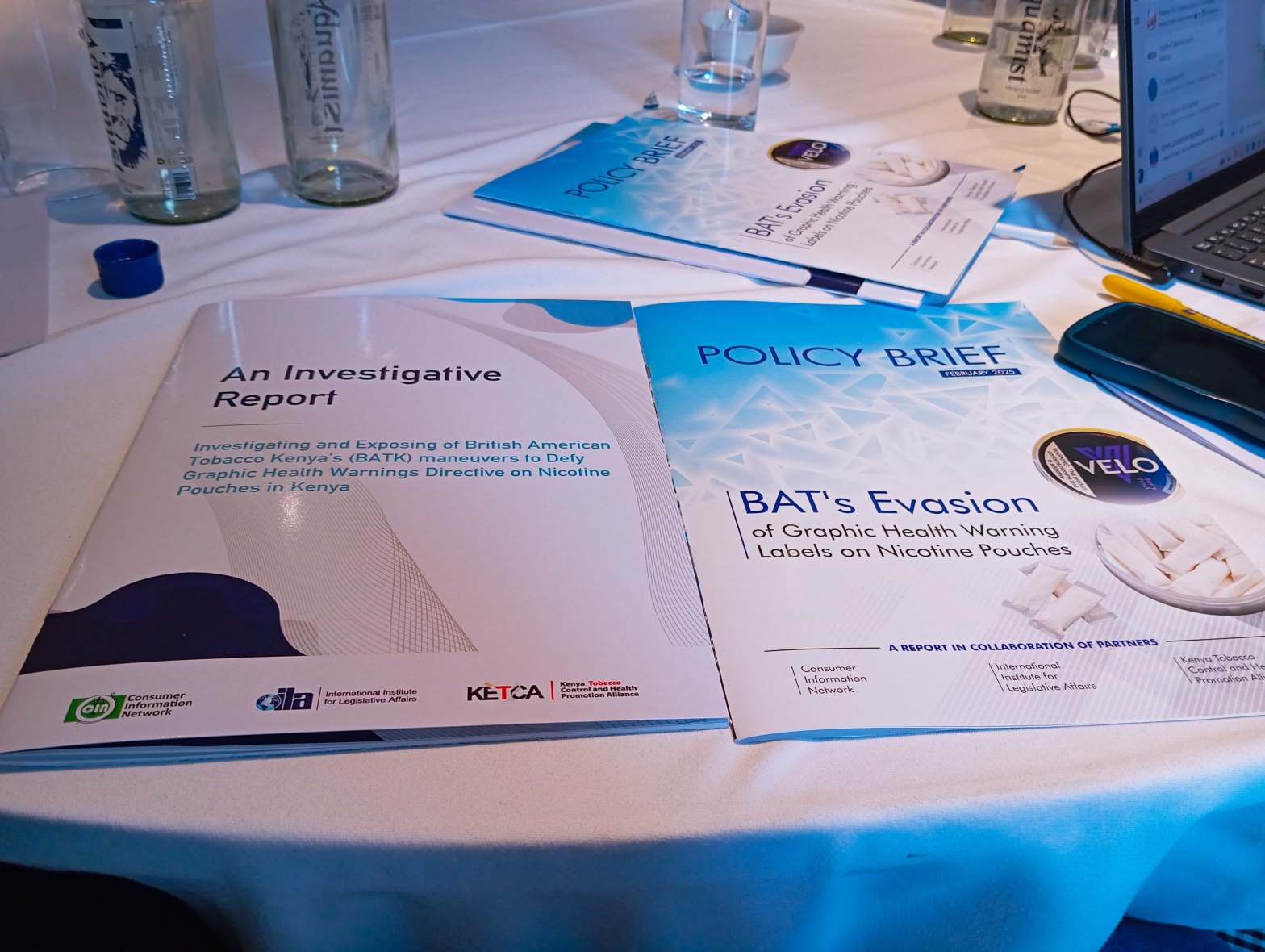
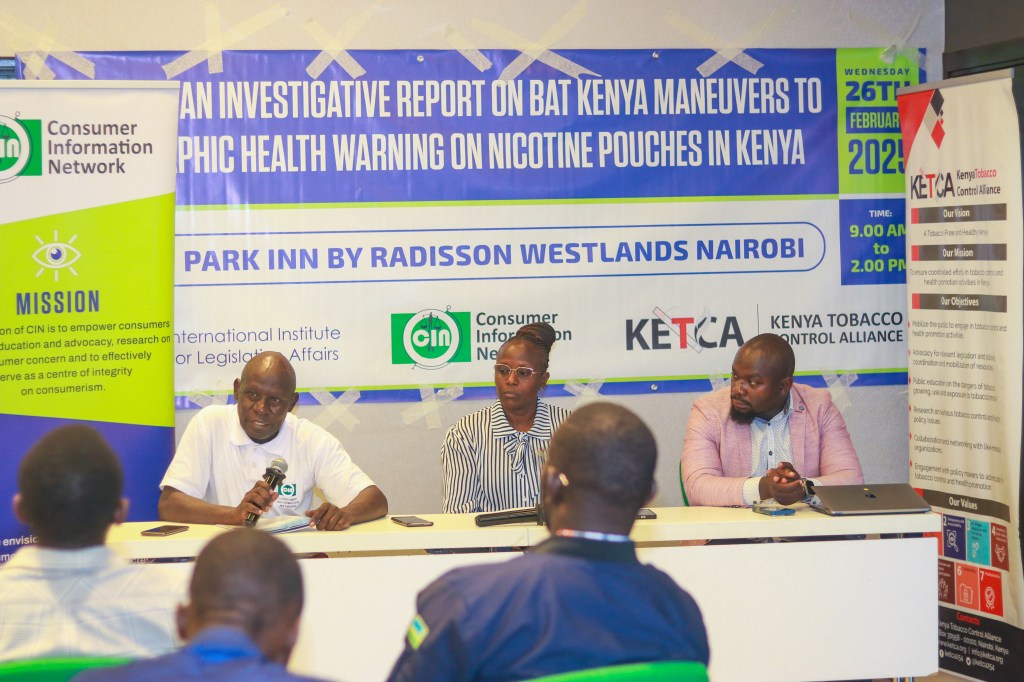
During the launch of an Investigative Report on BATK Interference with Tobacco Control in Kenya, by International Institute for Legislative Affair and partners, I asked the authors why the focus was on BAT Kenya and not other tobacco companies. Their response was clear—BATK has been at the forefront of challenging regulations, suing the government multiple times in a choreographed attempt to delay life-saving policies. And nothing could be further from the truth.
Through the Online Tobacco Industry Monitoring Course offered by the Africa Centre for Tobacco Industry Monitoring, I have gained a deeper understanding of how British American Tobacco (BAT) has systematically undermined tobacco control policies in Kenya. The extent of BAT’s interference is both shocking and infuriating. I thought it would be valuable to share this knowledge, especially in light of the Investigative Report on BATK Interference with Tobacco Control in Kenya, launched recently.
How BAT Undermined Kenya’s Tobacco Control Law
Kenya’s journey toward effective tobacco control has been fraught with obstacles, many of them placed deliberately by the tobacco industry. In 2007, Kenya passed a new Tobacco Control Act, aimed at protecting citizens from the harms of tobacco (Ministry of Health-Kenya, 2012). However, this victory was short-lived. The law required additional regulations for full implementation, but for seven years, no regulations were enacted—a delay orchestrated by industry lobbying.
When the government finally issued the necessary regulations in 2014, BAT immediately sued, challenging them on constitutional grounds. This move stalled implementation, leaving Kenyans exposed to the deadly effects of tobacco products (Tobacco Tactic, 2020).
Despite a 2016 High Court ruling that upheld the regulations, BAT escalated the fight to the Court of Appeals, which reaffirmed the government’s position (Zhou, 2017). Yet BAT still refused to accept defeat. In a final attempt to block regulation, it took the case to the Supreme Court of Kenya. **It was not until November 2019—**after a 13-year delay—that the Supreme Court upheld the constitutionality of Kenya’s tobacco control regulations (WHO, 2020).
The Devastating Consequences of BAT’s Interference
The impact of these delays has been nothing short of catastrophic:
- Thousands of preventable deaths – Tobacco use kills over 9,000 Kenyans annually (Campaign for Tobacco-Free Kids, 2015). Delaying regulation means more lives lost.
- Rising Non-Communicable Diseases (NCDs) – Tobacco is a major contributor to cancer, cardiovascular diseases, and chronic respiratory illnesses, increasing Kenya’s disease burden (WHO, 2024).
- Lost Public Funds – The government spent millions in legal costs defending tobacco regulations, diverting resources from healthcare and social services.
- A New Generation of Smokers – The delay allowed the tobacco industry to continue targeting young people, leading to increased smoking rates.
Looking Ahead: A Global Call to Action
The upcoming World Conference on Tobacco Control (WCTC 2025) in Ireland presents a critical opportunity to discuss stronger measures to counter industry interference. Kenya’s experience with BAT serves as a cautionary tale—if governments do not stand firm, tobacco companies will exploit legal loopholes to delay regulation indefinitely.
What Must Be Done?
- Expose and document industry interference – Transparency is our strongest.
- Strengthen legal protections against industry-backed lawsuits.
Implement high tobacco taxes – A proven strategy to reduce consumption and fund health programs. - Ban industry partnerships – Governments must reject any influence from Big Tobacco (WHO FCTC Article 5.3).
Tobacco control is a battle for public health, social justice, and economic progress. As we move towards WCTC 2025, let’s ensure the discussion translates into action. The time to stand up against Big Tobacco is now!
#WCTC2025 #TIMRA2025 #TobaccoTaxSavesLivesKE
References
Campaign for Tobacco-Free Kids. (2015). The Toll of Tobacco in Kenya. Campaign for Tobacco-Free Kids. https://www.tobaccofreekids.org/problem/toll-global/africa/kenya
Ministry of Health-Kenya. (2012). TOBACCO CONTROL ACT CHAPTER 245A. https://www.chskenya.org/wp-content/uploads/2016/05/Tobacco-Control-Act-2007-.pdf
Tobacco Tactic. (2020, February 5). Kenya- BAT’s Tactics to Undermine the Tobacco Control Regulations – Tobacco Tactics. Tobacco Tactics. https://www.tobaccotactics.org/article/kenya-bats-tactics-to-undermine-the-tobacco-control-regulations/
WHO. (2020). Supreme Court of Kenya rejects British American Tobacco appeal against Tobacco Control Regulations | WHO FCTC. Who.int. https://extranet.who.int/fctcapps/fctcapps/fctc/kh/legalchallenges/news/supreme-court-kenya-rejects-british-american-tobacco-appeal
WHO. (2024). Tobacco and noncommunicable diseases. Who.int. https://www.who.int/europe/publications/tobacco-and-noncommunicable-diseases
Zhou, S. (2017). Court of Appeal of Kenya rejects BAT challenge to Tobacco Control Regulations | McCabe Centre for Law and Cancer. Mccabecentre.org. https://www.mccabecentre.org/news-and-updates/court-of-appeal-of-kenya-rejects-bat-challenge-to-tobacco-control-regulations.html
 ODUOR KEVIN