
Tobacco Industry Interference Digital Watch Initiative (TIIDWI) monitor and expose tobacco industry tactics that shape public perception, influence policy, and drive market expansion. Through real-time tracking, we identify studies, reports, and media narratives that either promote industry interests or provide valuable insights into tobacco control. Today, we turn our attention to a recent study that sheds light on how the tobacco industry markets oral nicotine products to businesses—an area that has received far less scrutiny compared to consumer-facing advertising.
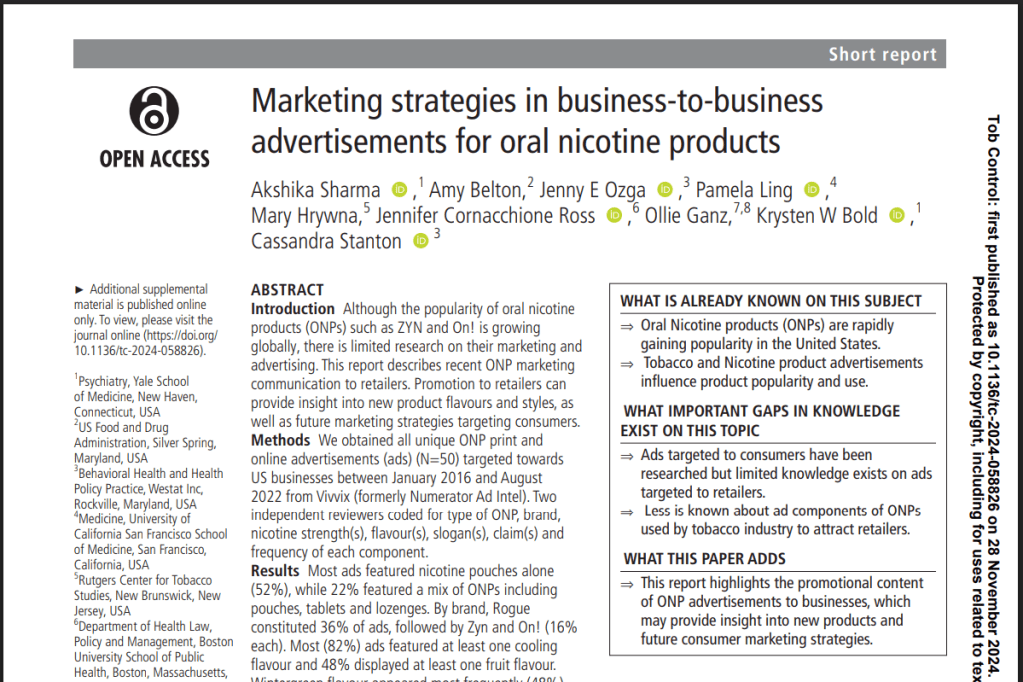
A short report titled “Marketing strategies in business-to-business advertisements for oral nicotine products”, published in PubMed, reveals the aggressive and strategic marketing techniques used by nicotine companies to penetrate new markets. Unlike traditional cigarette promotions that target consumers directly, oral nicotine products—such as nicotine pouches and lozenges—are increasingly being marketed business-to-business (B2B) to wholesalers, retailers, and distributors. This approach allows the industry to shape availability, pricing, and product positioning before consumers even engage with the products.
Key Findings from the Report:
- Framing Nicotine as a “Modern” and “Smokeless” Alternative
The study found that oral nicotine products are often presented as “cleaner, safer, and more socially acceptable” alternatives to smoking. This marketing strategy mirrors the harm reduction narrative frequently pushed by the industry to normalize nicotine use rather than discourage it. By doing so, companies create a perception that switching to oral nicotine is a “progressive” choice rather than a potential public health risk. - Emphasizing Profitability and Market Growth
Advertisements directed at businesses highlight the high-profit margins and strong market demand for oral nicotine products. Distributors and retailers are enticed with promises of rapid sales growth, leveraging data on shifting consumer preferences to push more stock into retail outlets. This technique increases product visibility and accessibility, potentially leading to a rise in nicotine dependence—especially among young and first-time users. - Targeting Convenience Stores and Online Retailers
The study uncovered a focused effort to distribute oral nicotine products through convenience stores, gas stations, and e-commerce platforms. These channels make it easier for young and vulnerable populations to access nicotine products without the scrutiny seen in regulated pharmacy or medical settings. This tactic mirrors cigarette marketing from previous decades—where convenience and impulse purchases were key to sustaining addiction. - Use of “Partnership” Language to Gain Industry Allies
Tobacco companies are positioning themselves as business allies rather than product suppliers. Phrases such as “partner with us for a smoke-free future” or “join the nicotine innovation wave” create a sense of collaboration, making business owners feel like they are part of a larger, positive movement. This not only helps secure product placement but also weakens retailer resistance to stocking nicotine products.
Implications for Tobacco Control
This study serves as a wake-up call for policymakers, public health advocates, and regulators. The marketing strategies used in B2B advertising bypass traditional consumer-focused regulations, allowing the tobacco industry to expand its reach while avoiding direct public scrutiny. Some key takeaways for tobacco control efforts include:
- Strengthening Advertising Regulations: Many nicotine control policies focus on consumer advertising, but this study highlights the need for B2B marketing restrictions to prevent tobacco companies from exploiting commercial partnerships.
- Monitoring Retail Supply Chains: By tracking where and how oral nicotine products are distributed, public health agencies can identify high-risk sales points and push for targeted interventions.
- Counteracting Industry Narratives: The claim that oral nicotine is a “modern, cleaner alternative” needs to be challenged with scientific evidence on the risks of nicotine dependence and long-term health effects.
Final Thoughts
The rise of B2B marketing for oral nicotine products signals a new frontier in tobacco industry interference. By shifting the conversation from consumers to retailers, tobacco companies are strategically embedding nicotine into everyday commercial spaces. This study provides valuable insights that should inform stricter regulatory approaches, ensuring that nicotine products do not gain a foothold through unchecked business partnerships.
To read the full study, click here: PubMed: Marketing Strategies in Business-to-Business Advertisements for Oral Nicotine Products.
Through TIIDWI, we will continue to monitor these emerging industry tactics and expose efforts that seek to undermine public health policies.
#StayInformed #StayVigilant!
 ODUOR KEVIN