
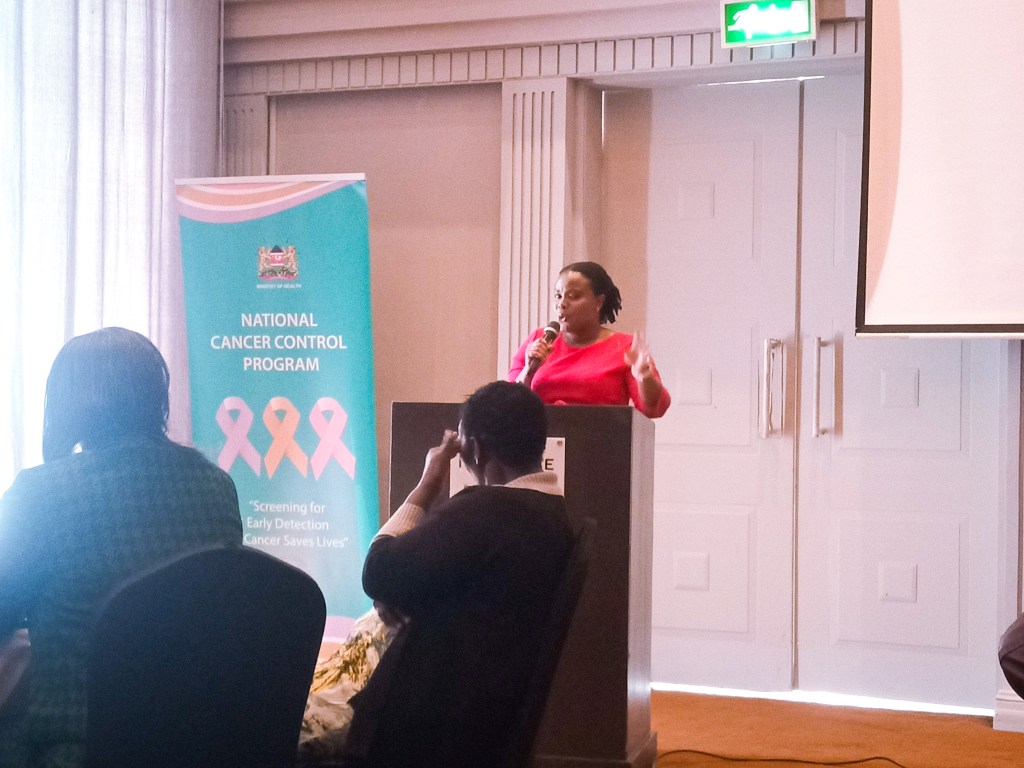
Recently, I had the privilege of attending a cervical cancer advocacy training organized by the National Cancer Control Program under the Ministry of Health-Kenya. The training, held at Mercure Hotels, Nairobi Upper Hill, provided invaluable insights into the prevalence, prevention, and treatment of cervical cancer.
During the training, it was observed that cervical cancer is a public health concern. Despite its low global morbidity and mortality rate, cervical cancer remains a leading cause of death in Kenya, accounting for 11.9% mortality. This staggering statistic underscores the urgent need for increased awareness and preventive measures.
We also demystified the challenges and barriers to cervical cancer elimination. It was discussed that despite the availability of preventive measures, challenges such as HPV vaccine hesitancy, cultural and attitudinal barriers, and poor uptake persist. Myths and misconceptions surrounding the HPV vaccine, coupled with limited resources for vaccine administration, pose significant obstacles to cervical cancer prevention efforts.
We also learnt that cervical cancer does not discriminate and affects women of all ages, with a higher prevalence among those aged 35-49 years. Additionally, women living with HIV/AIDS are at a heightened risk due to compromised immune systems, making them more susceptible to HPV infection. Symptoms such as abnormal bleeding, post-menopausal bleeding, and unusual vaginal discharge serve as warning signs, underscoring the importance of regular screenings.
The training emphasized the preventability and treatability of cervical cancer, particularly when diagnosed early. Facilitators emphasized that early detection is crucial in effectively managing cervical cancer. Key prevention strategies shared include the HPV vaccine, primarily administered to 10–14-year-old girls, and the single-visit screen-and-treat (SV-SAT) approach, which streamlines cervical cancer screening and treatment. Additionally, preventive measures such as condom promotion and provision, and male circumcision play a vital role in reducing the risk of cervical cancer transmission.

As I reflect on the knowledge gained from cervical cancer advocacy training, I am reminded of the critical role education and awareness play in combating this devastating disease. I am eager to utilize the insights gained to contribute to cervical cancer prevention and advocacy efforts within my community and beyond.
 ODUOR KEVIN
Thank you for this information for it is very important as far as health is concerned and especially to us ladies. To any lady who has gone through this,may you not neglect it but step out and have screening done for the betterment of your health .
LikeLike