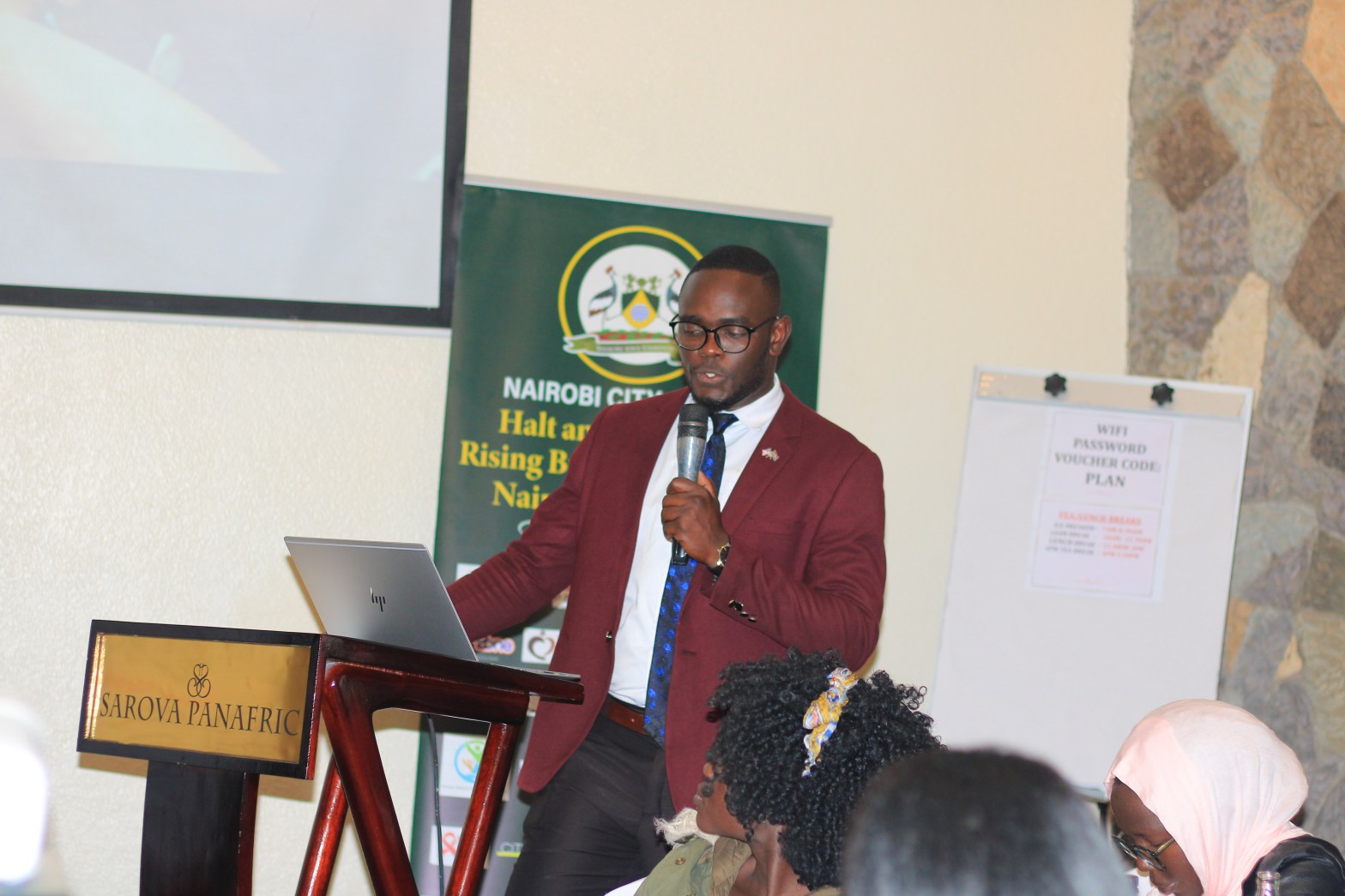
I was privileged to have been invited to deliver a keynote presentation on Best Practices for Youth Engagement in NCD Program. Co-hosted by Plan International Kenya and Nairobi City County NCD department, the event offered me a distinct opportunity to share insights and best practices to a diverse audience passionate about reshaping the landscape of Non-Communicable Diseases (NCDs) management through the active involvement of the youth. Beginning my presentation, I shared some of the staggering NCD statistics and underscored that most of the NCDs that people grapple with are attributable to behaviors they developed during adolescence stage.
This event emerged from a shared understanding of and a commitment to harness the untapped potential of the younger generation in addressing the multifaced challenges posed by NCDs. During my presentation, I acknowledged the importance of youth engagement in NCD programs, highlighting that young people are key stakeholders in NCD management and should not just be engaged to rubber stamp decisions. I insisted that young people must be meaningfully involved and engaged so as to tap into their unique perspectives and develop their capacity to deliver impactful NCD programs. Accordingly, I emphasized that engaging young people establishes a foundation for creating future advocates and leaders in health promotion.

On the strategies for engaging young people, I echoed that implementors of NCD programs must incorporate interactive workshops and educational sessions that are tailored to youth preferences to enhance awareness in NCDs. Since young people are tech-savvy, leveraging social media, health apps and online platforms support in disseminating information and fostering discussions that improve health literacy among the younger generation. I also highlighted the utility of peer-to-peer educational model to ensure relatability and effective NCD knowledge transfer.

The event was also an opportunity to take the audience through real-work examples and success stories, showcasing the transformative power of youth-led initiative. I shared about the wonderful milestones we have achieved at Stowelink foundation, reflecting on our past projects including the NCDs365, IPAB and the 21st projects, all which were designed and led by young people.
Looking Forward:
This event served as a testament to the growing recognition of the youth as change agents in public health initiatives. It also underscores the importance of collaboration between organizations, government bodies, and communities in fostering an environment where the youth can thrive as advocates for health and well-being.
In closing, the Sarova Panafric event was not just a moment in time but a step forward in a journey towards a healthier and more empowered future. It is my hope that the insights shared during the keynote presentation will continue to inspire and guide organizations and individuals in their endeavors to effectively engage the youth in the ongoing battle against Non-Communicable Diseases.
It should be noted that the active involvement of youth in NCD programs is not just an investment in today’s health but a commitment to a healthier and more resilient future. By empowering and engaging our youth, we pave the way for a collective effort towards combating non-communicable diseases and fostering a culture of lifelong well-being.
 ODUOR KEVIN