
I was excited to participate in a Community Alcohol and Human Rights Monitor training organized by the Non-Communicable Diseases Alliance Kenya (NCDAK). The training was dominated by illuminating and stimulating discussions on how the Alcohol Industry has perpetuated human rights violations. The training brought together youth, community leaders, opinion shapers, and persons living with NCDs or who have lived experience with NCDs. The training covered the following topics;
- The adverse effects of excessive alcohol consumption on individuals, families, and society
- Human rights implications and violations associated with alcohol abuse
- Policies and strategies for effective alcohol harm reduction.
- The role of advocacy and community involvement in addressing the issues
The workshop featured interactive sessions and case studies and provided a glorious opportunity for knowledge exchange, collaboration, and networking among the participants.
Alcohol Adverse Effects
Alcohol harm reduction discussions have gained national, regional, and even global traction due to the increased acknowledgment of the negative impact of alcohol consumption. According to Movendi International , arguably the largest independent global movement for development through alcohol prevention, one person dies every ten seconds because of alcohol. This represents about 5.3% of all deaths and more than 5% of the global disease burden. It is startling to learn that mortality resulting from alcohol use is higher than those caused by diseases such as tuberculosis, HIV/AIDs, and Diabetes.
Indeed, alcohol is a major obstacle to sustainable human development, adversely affecting all three dimensions of development and reaching into all aspects of society. It is jeopardizing human capital, undermining economic productivity, destroying the social fabric, and burdening health systems. Alcohol kills 3 million people worldwide every year. Alcohol has repercussions that span across many sectors including health, education, community safety, and children’s rights. It is a major contributor to many different social and health problems ranging from social disorder, gender-based violence, intimate partner violence, and family breakdown, to loss of income and increase in crime rates.
It should be noted that alcohol is one of the major risk factors for NCDs. During the training, the link between alcohol and NCDs was explored. There is a strong link between alcohol and NCDs, particularly cancer, cardiovascular disease, digestive diseases, and diabetes, as well as mental ill-health. Alcohol consumption caused an estimated 1.7 million NCD deaths in 2016, according to the Global Status Report on Alcohol and Health (2018). This equals 4.3% of all NCD deaths and 65.5 million NCD Disability-Adjusted Life Years (DALY). Recent studies have revealed that alcohol is a known carcinogen (causing cancer). The CAHRM training recognized that alcohol increases the risk of getting cancers of the female breast, liver, mouth, throat, esophagus, and bowel. Additionally, the nexus between alcohol and mental health was also discussed during this training. Alcohol is a depressant, meaning it can disrupt the balance of neurotransmitters in the brain, affecting feelings, thoughts, and behavior.
Alcohol and Human Rights Violation
The intersection between alcohol consumption and human rights is apparent. When talking about alcohol and human rights, it is easy to miss the point and assume that alcohol consumption is a human right or a freedom that should not be denied. A human-rights-based approach to alcohol consumption advocates neither for the free flow of alcohol into communities nor the blanket application of alcohol bans. During the training, it was acknowledged that a human rights-based approach to alcohol control should ensure communities are empowered to recognize and report their human rights violations by alcohol abusers. Indeed, alcohol consumption leads to the violation of fundamental human rights contained in the Universal Declaration of Human Rights (UDHR) in addition to the regional and national policy instruments. The right to health, safety, education, and shelter among other fundamental rights and freedoms are enshrined in the UDHR. These rights can be greatly impacted by alcohol consumption through intimate partner violence, gender-based violence (infringing right to safety and health), sexual assault (infringing sexual and reproductive health rights), increased crime rate (impacting safety), loss of family income (denying children right to food and education) and family disorders.

During the CAHRM training, participants were implored to monitor human rights violations due to alcohol and utilize relevant channels to address them and escalate the issue to relevant authorities. Monitoring human rights violations as a result of alcohol is a commendable step toward alcohol harm reduction. Not only does it help to promote fundamental human rights but also enhances the achievement of health-related sustainable development goals (SDGs).
Policies and Strategies for Effective Alcohol Harm Reduction.
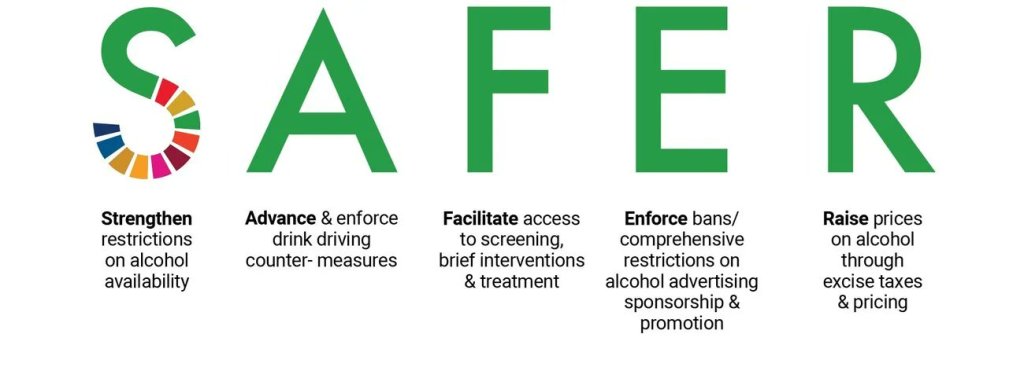
Alcohol is not an ordinary commodity. As such, there is a need for a robust regulatory system with necessary control policies to guarantee alcohol harm protection. Alcohol control policies are laws, regulations, guidelines, and rules established to support efforts toward preventing and reducing alcohol-related harms. During the CARM training, global, regional, and national policies were discussed. It was noted that alcohol control policies cover aspects of access, price, marketing, and drinking while driving. In terms of access, policies should limit access and availability of alcohol, albeit through innovative mechanisms. Fiscal policies such as tax regimes that impose excise duty were recognized as effective since they help to naturally discourage consumption by reducing people’s purchasing power. Policies on deceptive marketing require active enforcement of those policies. Strong drink-driving policies must also be enforced through sobriety checkpoints and random breath testing to help prevent accidents that have claimed many lives in Kenya and worldwide.
One of the technical packages and initiatives discussed during the training was SAFER. SAFER is a new initiative and technical package outlining 5 high-impact strategies that can help governments reduce the harmful use of alcohol and related health, social, and economic consequences.
The Role of Alcohol Advocacy and Community Involvement
Alcohol harm reduction should not be seen as a preserve of governments. It requires collaboration and partnership bringing together Civil Society Organizations (CSOs), governments, communities, and individual, academic, and religious institutions among others. WE ALL HAVE AN important role in ENSURING THAT ALCOHOL USE IS REDUCED so as to reduce the associated health risks, and health services have to provide effective interventions for those in need of help and their families. Alcohol advocacy helps to sustain the momentum for alcohol reduction efforts and gives people the opportunity to talk about issues that have a direct bearing on their lives. Community involvement is important for fast-tracking alcohol harm reduction efforts. When the community is involved, achieving the desired outcomes is almost guaranteed. They play ambassadors’ role and help with monitoring human rights violations.

A special thanks to NCD Alliance Kenya and its funding partner, IOGT-NTO Movement, for this wonderful initiative. Addressing alcohol consumption will spur development spanning health, education, and economic sectors among others.
 ODUOR KEVIN