
On 30th August, I participated in the RESET Alcohol Initiative forum organized by the International Institute for Legislative Affairs (IILA). The object of this forum was to present an assessment report on proposed amendments to the Alcohol Drink Control Act (ADCA), 2010, and the corresponding county legislation. IILA, with support from Movendi International and Vital Strategies, is advocating for alcohol control through taxation, and legal and policy changes. The RESET Alcohol Initiative is geared toward bringing together national governments, civil society, research organizations, and global leaders in public health and alcohol policy to develop and implement evidence-based alcohol policies from the World Health Organization’s (WHO) SAFER technical package.
It should be noted that alcohol use is one of the major risk factors for non-communicable diseases (NCDs). Currently, the global deaths as a result of these diseases stand at a staggering 74%, according to WHO. The RESET Alcohol initiative seeks to reduce alcohol consumption in order to mitigate its health, social, and economic consequences.
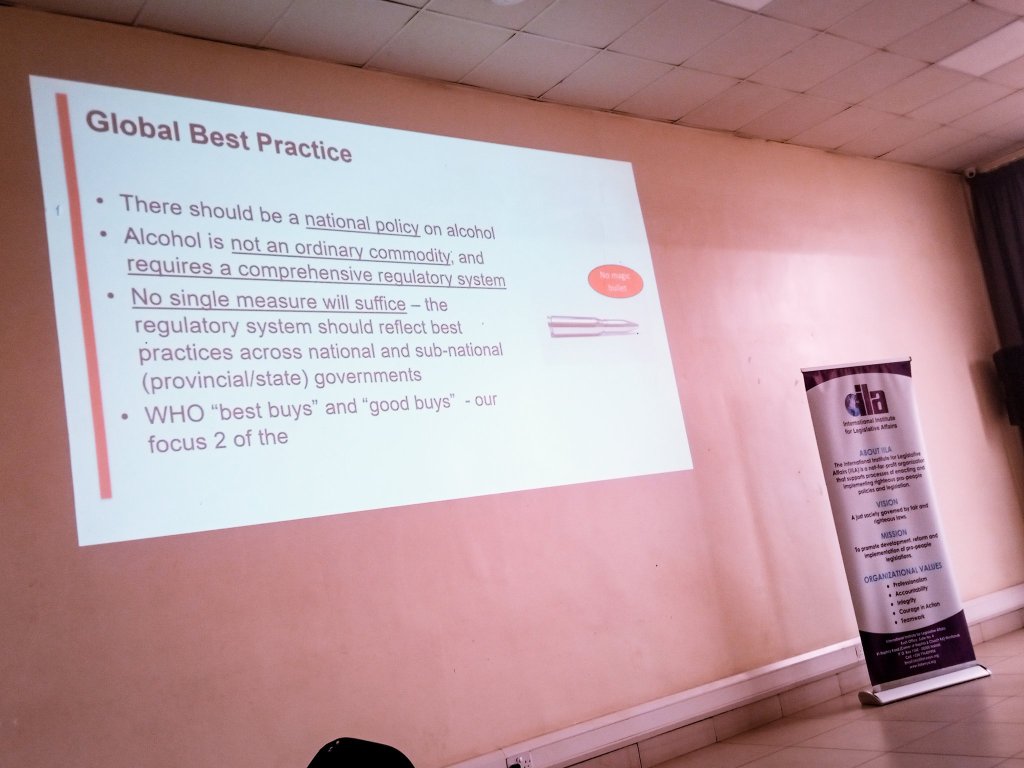
Some of the amendments proposed in the ADCA 2010 include anchorage of alcohol taxation in the legal instruments as one of the fiscal measures to reduce consumption. Alcohol taxation is considered the single most cost-effective alcohol policy solution. It not only discourages consumption, but it also helps generate the necessary revenues to implement alcohol control strategies. It helps revise alcohol prices upwards and reduce alcohol availability. Amendments were also proposed for advertisement, sponsorship, promotion, and sale of alcohol. The government is called upon to ensure advertisement regulations are adhered to so as not to expose vulnerable groups and delay alcohol initiation. Alcohol is not an ordinary commodity hence the need for a robust regulatory system.
As NCD advocates, we are excited about this new initiative. For meaningful outcomes to be achieved, we must all join and support alcohol consumption reduction efforts. As Adam Karpati, Senior Vice President of Vital Strategies mentioned, we must all RESET from an environment where the alcohol industry is empowered to push alcohol into nearly every aspect of our lives. But the onus can’t be on certain individuals alone. WE ALL HAVE AN important role in ENSURING THAT ALCOHOL USE IS REDUCED so as to reduce the associated health risks, and health services have to provide effective interventions for those in need of help and their families. Preventive measures against non-communicable diseases should contain efforts to prevent and reduce alcohol use.
 ODUOR KEVIN